
The 25 Worst Foods You Can Feed a Parrot
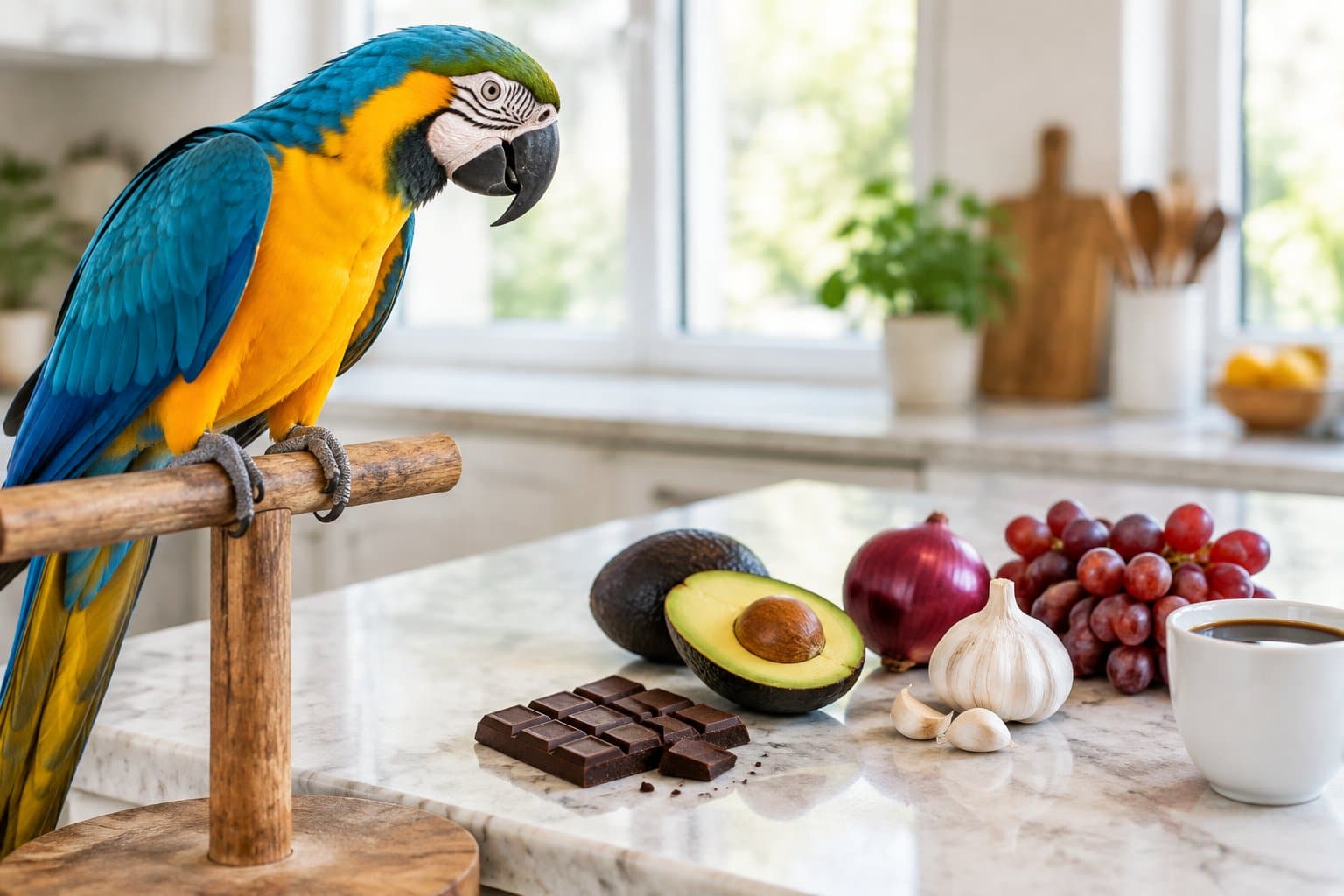
Parrots often beg for a bite of whatever you’re eating, and it’s tempting to share. Not every food on your plate is safe for your bird, and some can cause serious illness or death within hours.
Your parrot’s digestive system processes certain substances very differently than yours does. Foods that seem harmless to you may contain compounds that damage a bird’s heart, liver, or blood cells.
Knowing which foods to avoid protects your parrot from accidental poisoning in your own kitchen. This article covers the specific foods you should never offer your bird and explains why each one poses a risk.
1. Avocado
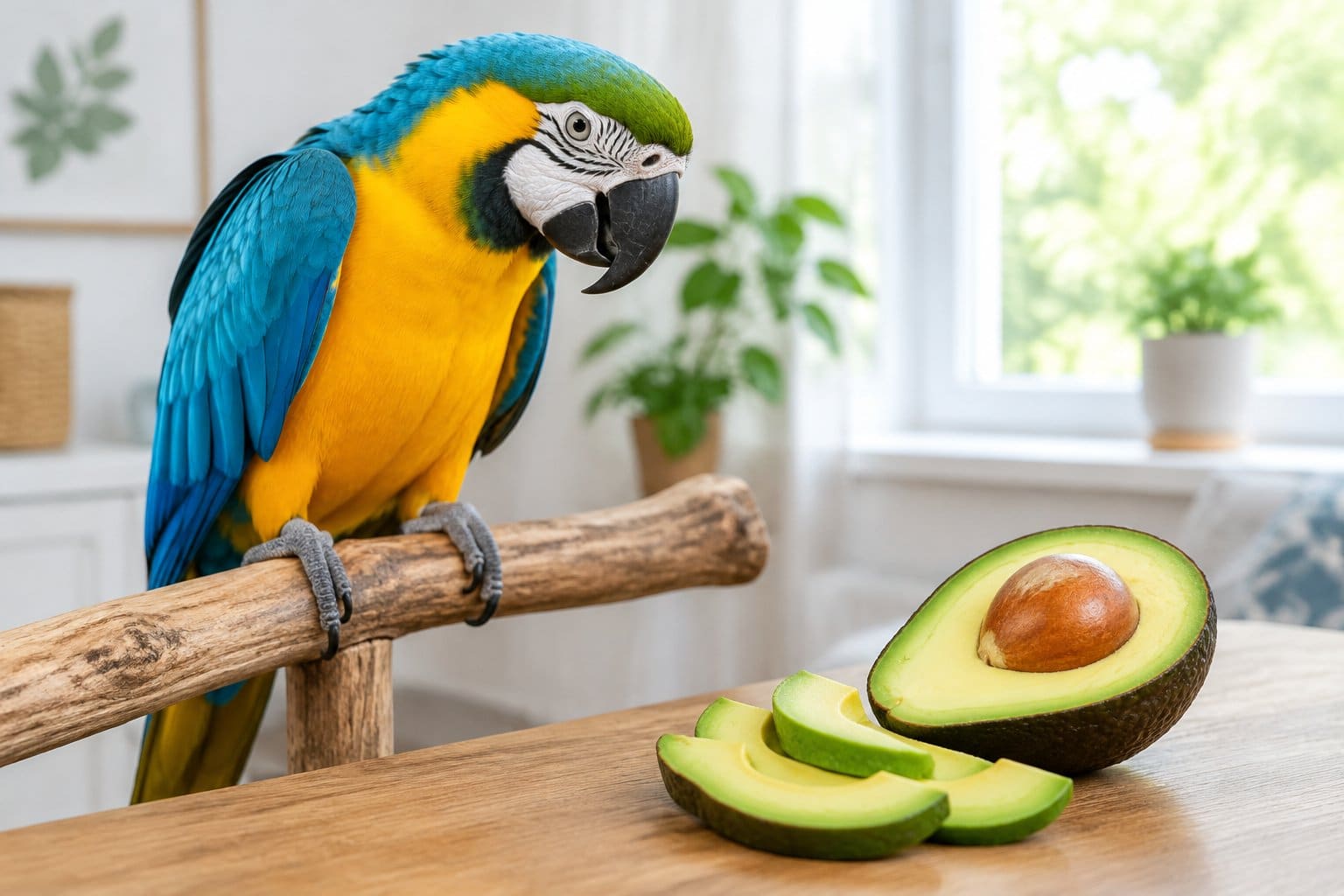
Avocado is one of the most well-known dangers for pet parrots, and for good reason. The fruit, pit, and skin all contain a compound called persin, which is toxic to birds even in small amounts. You might not notice anything unusual right away, since symptoms can take several hours to appear.
Once persin takes effect, it can damage the heart muscle and lead to serious cardiac problems. Your bird may show signs like lethargy, labored breathing, or weakness. In more severe cases, fluid can build up around the heart, which can be fatal if not caught quickly.
There’s no safe amount of avocado for your parrot, so it’s best to keep guacamole, salads, and any avocado-based dishes far away from your bird’s reach. Even a small taste can pose a risk, since bird species react differently to persin and sensitivity can vary.
If you suspect your parrot has eaten any part of an avocado, contact an avian vet right away. Quick action gives your bird the best chance of a full recovery.
2. Chocolate and cocoa
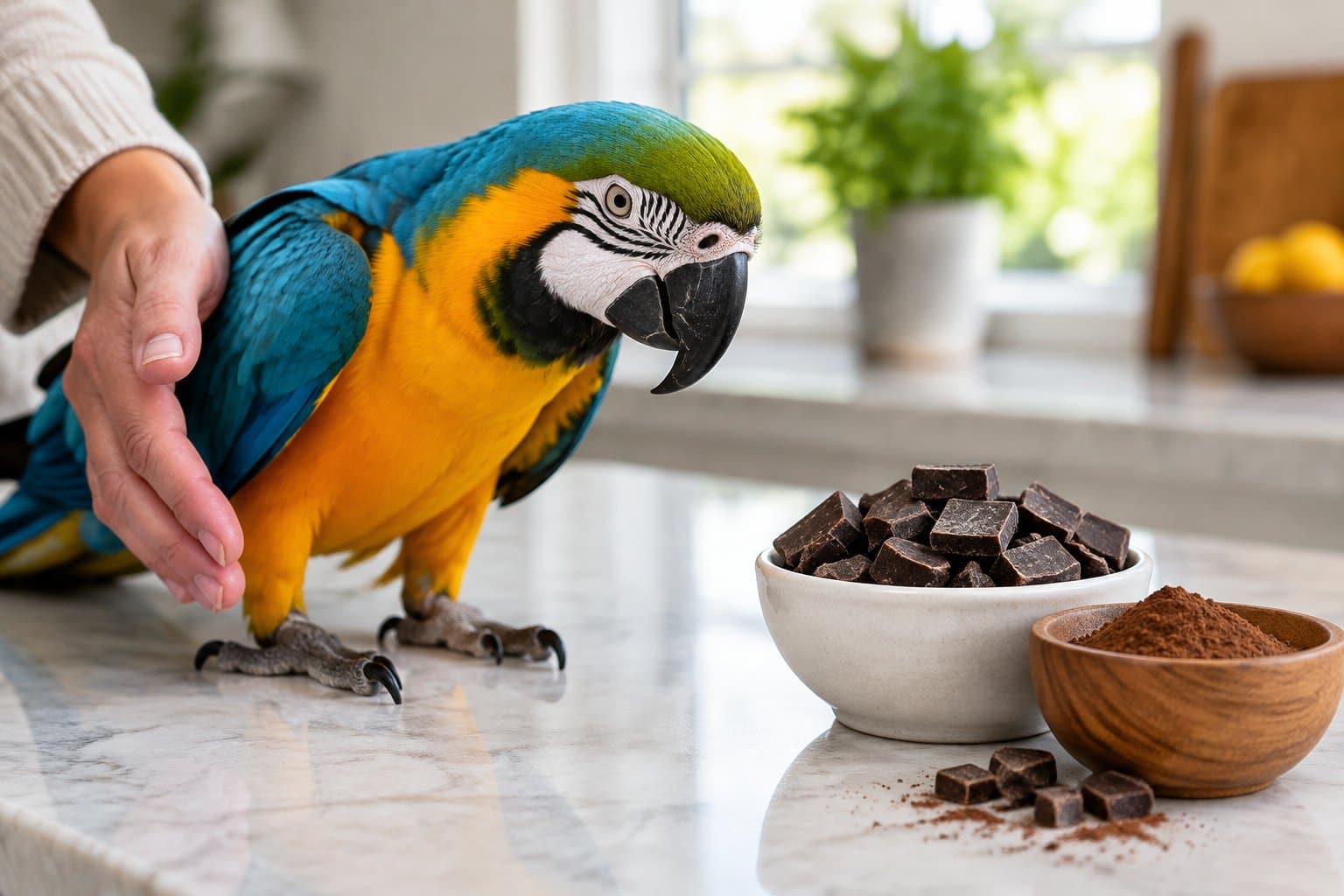
Chocolate is one of the most well-known dangers for parrots, and for good reason. It contains theobromine and caffeine, two compounds that birds cannot metabolize the way humans can. Even a small amount can cause serious problems for your parrot.
Your bird’s body processes these stimulants much more slowly than yours does. This means theobromine and caffeine build up in their system rather than being flushed out quickly. The result is a toxic effect that can escalate fast, especially in smaller parrot species.
Watch for symptoms like vomiting, diarrhea, and unusual thirst if your parrot has eaten any chocolate. Hyperactivity or restlessness often follows, along with an irregular heartbeat. In more serious cases, tremors or seizures can occur.
Darker chocolate and cocoa powder are more concentrated and pose a greater risk than milk chocolate. Baking chocolate and cocoa nibs fall into this higher-risk category too. You should keep all forms of chocolate and cocoa completely out of reach, including wrappers or baked goods your bird might peck at.
If you suspect your parrot has ingested any chocolate, contact an avian vet right away. Quick action gives your bird the best chance of a full recovery.
3. Mushrooms
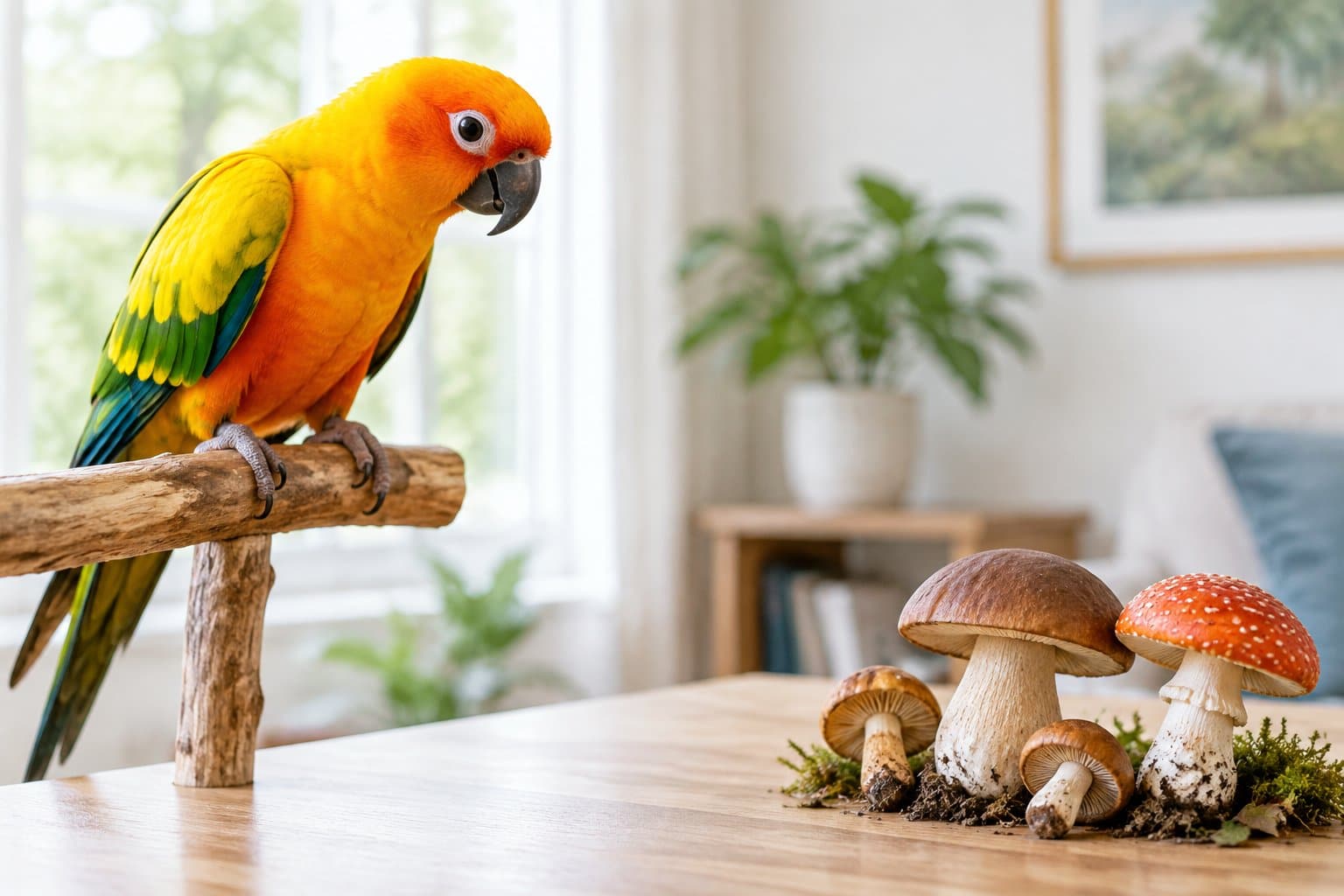
Mushrooms are fungi, not vegetables, and that distinction matters for your parrot’s safety. Many wild mushrooms contain toxins that can cause serious digestive and organ problems, and avian vets generally advise keeping all mushrooms away from pet birds.
You can’t always tell a toxic mushroom from a safe one just by looking at it. Some species cause mild stomach upset, while others can lead to liver failure. Since the risk varies so widely and isn’t easy to judge, it’s best to treat all mushrooms as off-limits for your bird.
Even common grocery store mushrooms, like button or cremini, aren’t worth the risk. Your parrot can get the same vitamins and minerals from vegetables that are known to be safe.
If your parrot eats mushrooms and shows vomiting, diarrhea, lethargy, or loss of appetite, contact your avian vet right away. These symptoms can point to toxicity and shouldn’t be ignored.
Keep mushrooms off your kitchen counter and out of reach, especially if you cook with them often. Your parrot’s curiosity means it may try to grab a piece if given the chance.
4. Coffee
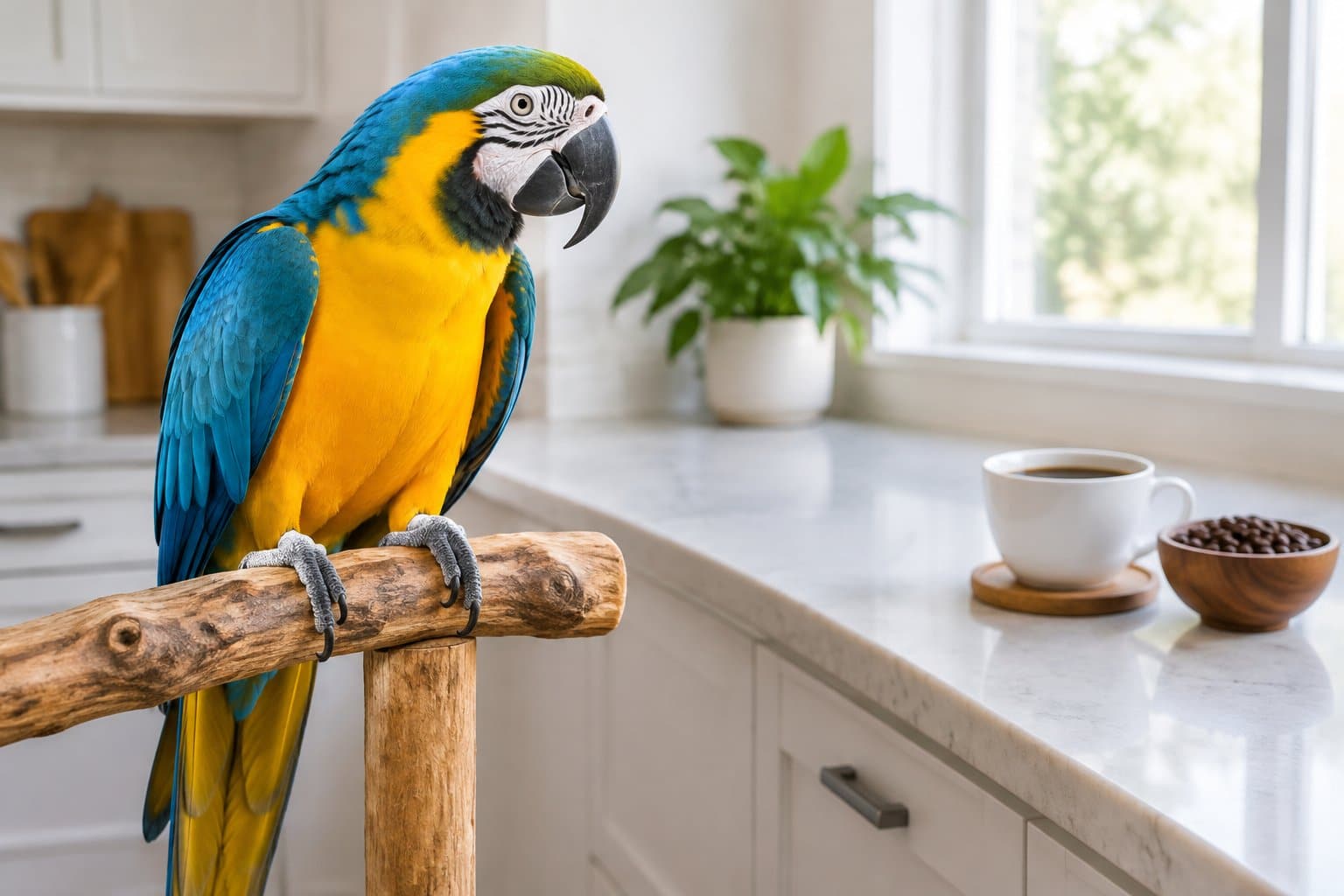
Coffee contains caffeine, and caffeine is dangerous for parrots. Birds process this stimulant very differently than humans do, and their bodies cannot handle it safely.
Even small amounts of coffee can affect your parrot’s heart and nervous system. Caffeine speeds up heart rate and can cause irregular heart rhythms in birds.
You should never leave a cup of coffee unattended near your parrot. Many birds are curious and will dip their beaks into open cups or spilled liquid out of simple curiosity.
It’s not just brewed coffee you need to worry about. Coffee grounds, beans, and even decaffeinated coffee can still contain trace amounts of caffeine, so none of these are safe options.
If your parrot ingests coffee, watch for symptoms like rapid breathing, tremors, hyperactivity, or an irregular heartbeat. In more serious cases, caffeine exposure can lead to seizures or cardiac arrest.
Keep your morning routine bird-safe by covering drinks and keeping your parrot in a separate area while you enjoy your coffee. If you suspect your bird has consumed any coffee product, contact an avian vet right away rather than waiting to see if symptoms appear.
5. Tea, soda and energy drinks
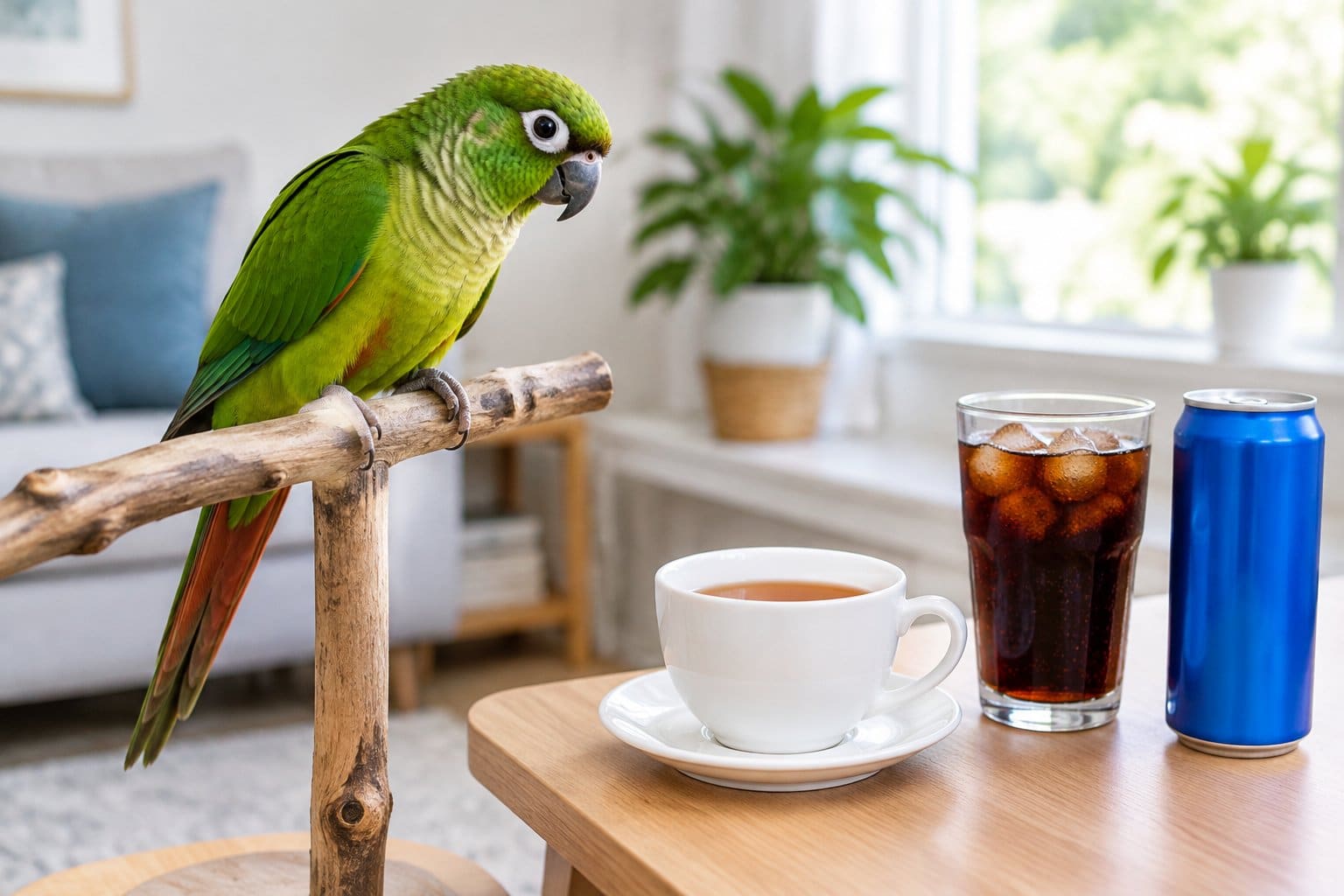
Caffeine is the main concern here, and it affects birds much more strongly than it affects you. Tea, coffee, soda, and energy drinks all contain caffeine in varying amounts, and even small sips can cause problems for your parrot.
Caffeine speeds up a bird’s heart rate and can lead to arrhythmia or cardiac arrest. You might notice your parrot becoming unusually hyperactive or restless after drinking caffeinated beverages. In more serious cases, tremors or seizures can follow.
Energy drinks pose an added risk because they often combine caffeine with high sugar content. This mix can overload your parrot’s system and contribute to digestive upset on top of the cardiac strain caffeine already causes.
Soda isn’t safe either, even caffeine-free versions. The sugar content alone can lead to weight gain and digestive issues over time, and carbonation doesn’t offer your bird any nutritional value.
Keep your morning coffee or tea out of reach, and never let your parrot sip from your cup. If you suspect your bird has ingested a caffeinated drink, contact your avian vet right away since symptoms can escalate quickly in such a small body.
6. Milk, cheese and ice cream
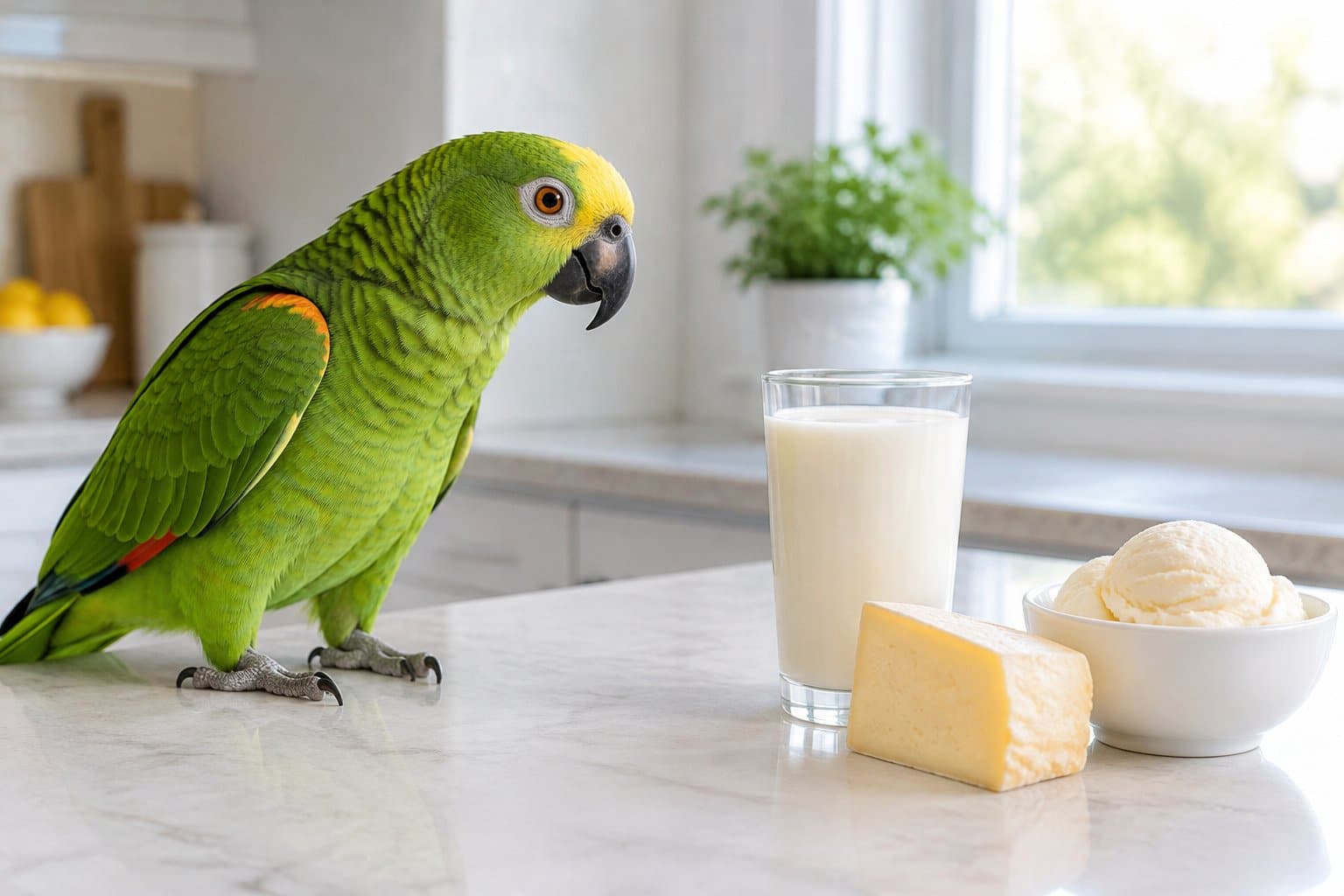
Parrots are lactose intolerant, so dairy products are not a good fit for their digestive system. They lack the enzyme needed to break down lactose properly, which means milk, cheese, and ice cream can cause real digestive trouble.
If you give your parrot dairy, you may notice diarrhea, bloating, or general digestive upset within a short time. This happens because the undigested lactose sits in their gut and ferments, leading to discomfort.
Ice cream brings extra problems beyond the dairy itself. It’s loaded with sugar, and often contains added fats that your parrot’s body isn’t designed to process in large amounts.
Cheese tends to be high in fat and salt, two things that aren’t great for a bird’s small body. Their kidneys and liver have to work harder to process these ingredients, and over time this can contribute to health issues.
You might think a small taste won’t hurt, but repeated exposure adds up. It’s best to skip dairy altogether and stick to foods that match what parrots naturally eat and digest well in the wild.
7. Alcohol
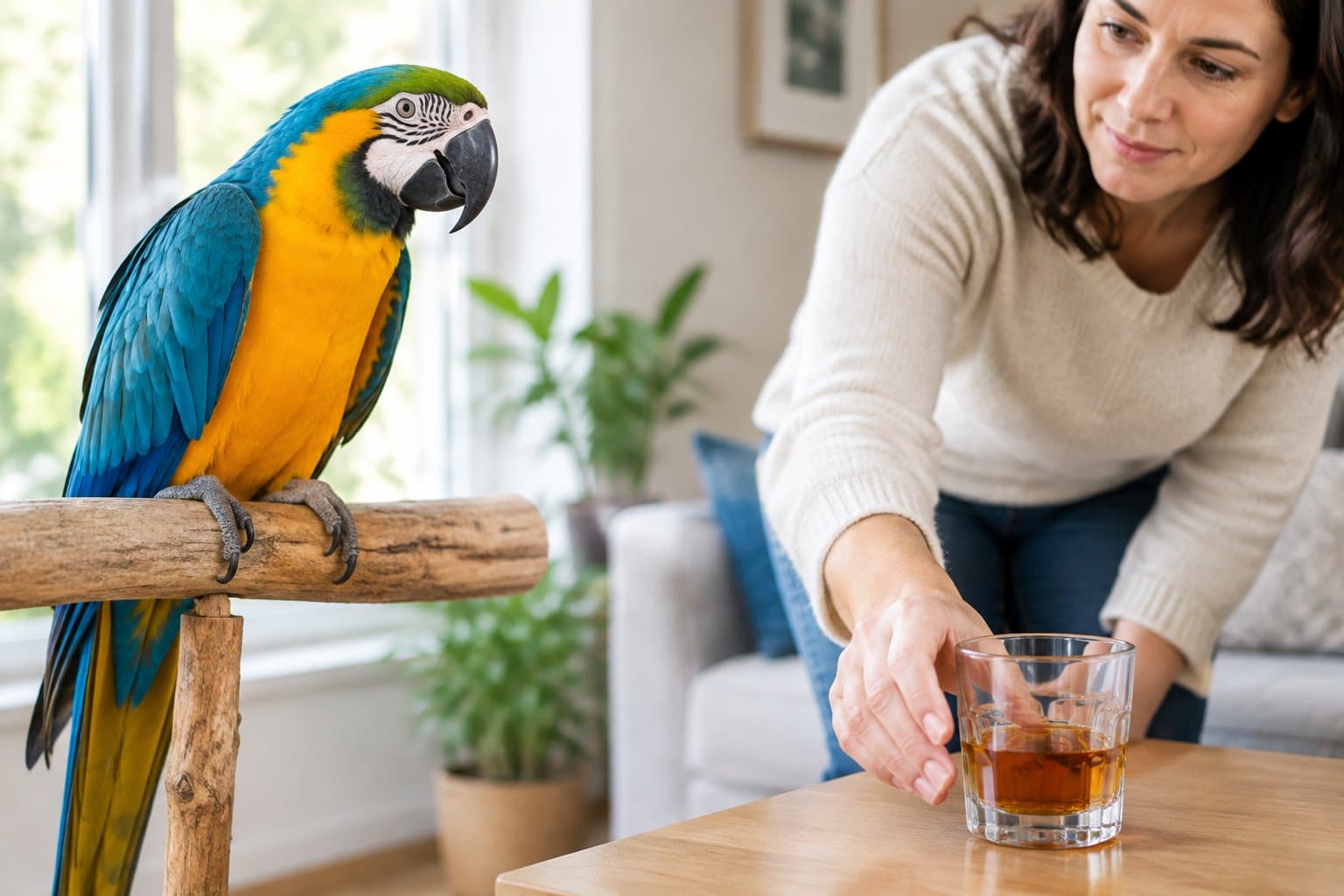
Alcohol is one of the most dangerous substances you can accidentally give your parrot. Birds are very sensitive to alcohol, and their small body size means even tiny amounts can cause serious harm.
You might think a few drops from your drink won’t matter, but that’s not the case. A small sip of beer, wine, or a cocktail can be enough to poison a bird.
Symptoms often include lethargy, loss of coordination, and labored breathing. Your parrot may appear disoriented or unable to perch properly, which signals that something is seriously wrong.
In more severe cases, alcohol can cause organ failure, especially affecting the liver and kidneys. The effects can come on quickly and get worse fast.
You should never let your parrot near unattended drinks, including beer, wine, or mixed cocktails. Even fermented fruit left out too long can pose a risk, since natural fermentation produces alcohol.
If you suspect your bird has ingested any alcohol, contact an avian vet right away. Quick action can make the difference between a full recovery and a life-threatening emergency.
8. Onions
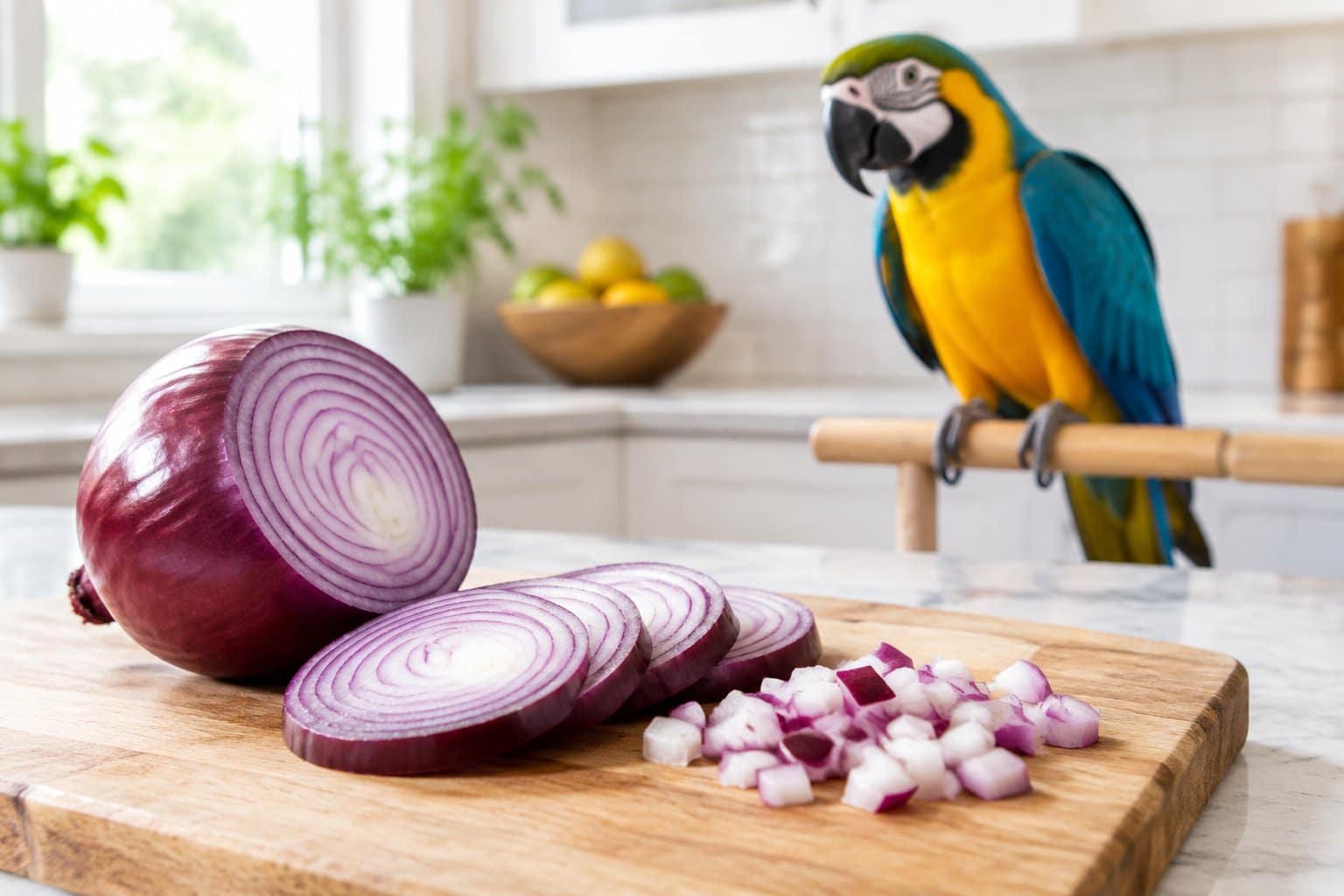
Onions seem harmless since they’re a kitchen staple, but they belong on your parrot’s danger list. Onions and other members of the allium family, including garlic, leeks, chives, and shallots, contain compounds that break down a bird’s red blood cells.
This condition is called hemolytic anemia. It can develop whether the onion is raw, cooked, or powdered, so leftover table scraps with onion seasoning are just as risky as a fresh slice.
You won’t see symptoms right away. Over time, your parrot may become weak, lethargic, or show pale or discolored droppings. Labored breathing is another warning sign, since fewer healthy red blood cells means less oxygen reaching your bird’s tissues.
There’s no safe amount of onion for a parrot, so you should avoid feeding any food that contains it, even in small quantities. Check ingredient labels on seasoned human foods before sharing them, since onion powder hides in many sauces, soups, and prepared dishes. If your bird accidentally eats something with onion in it, contact an avian vet rather than waiting to see if symptoms appear.
9. Garlic
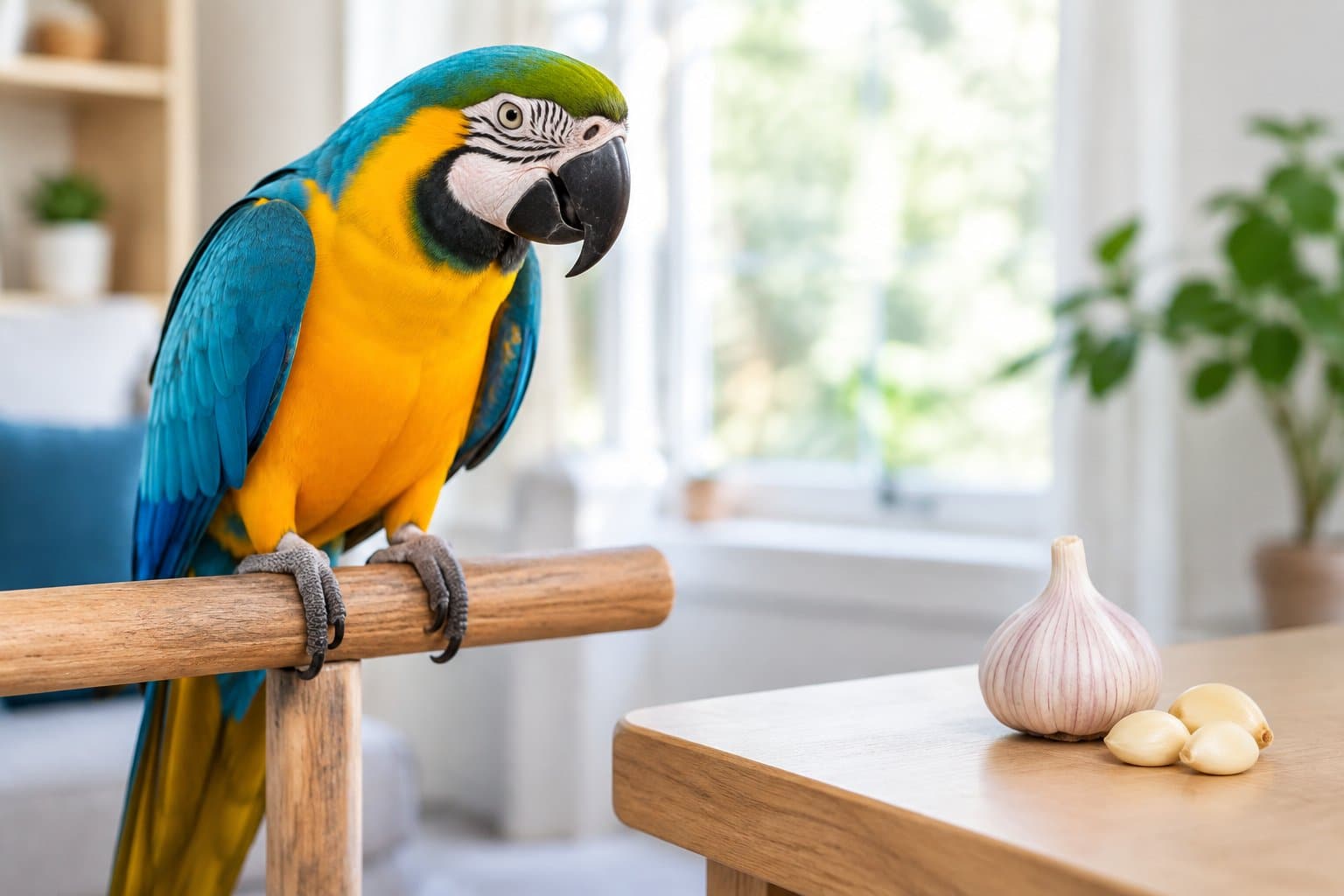
Garlic might seem harmless since it’s a kitchen staple, but it’s not safe for your parrot. It belongs to the same plant family as onions, and it contains similar sulfur compounds, including allicin, that damage a bird’s red blood cells.
This damage can lead to hemolytic anemia, a condition where red blood cells break down faster than your bird’s body can replace them. Over time, this reduces oxygen flow throughout the body, which puts strain on major organs.
You might hear claims that small amounts of garlic are fine or even beneficial for immune health. There’s no evidence supporting this when it comes to parrots, and no dose is considered truly safe for them.
Watch for signs like lethargy, weakness, pale coloring around the beak or feet, and reduced appetite if you suspect exposure. Breathing changes can also occur as anemia progresses.
Avoid feeding your parrot any dish containing garlic, including sauces, seasoned rice, or cooked vegetables prepared with it. Even small traces mixed into shared meals can add up over repeated exposure, so it’s best to keep garlic out of your bird’s diet entirely.
10. Leeks, chives and scallions
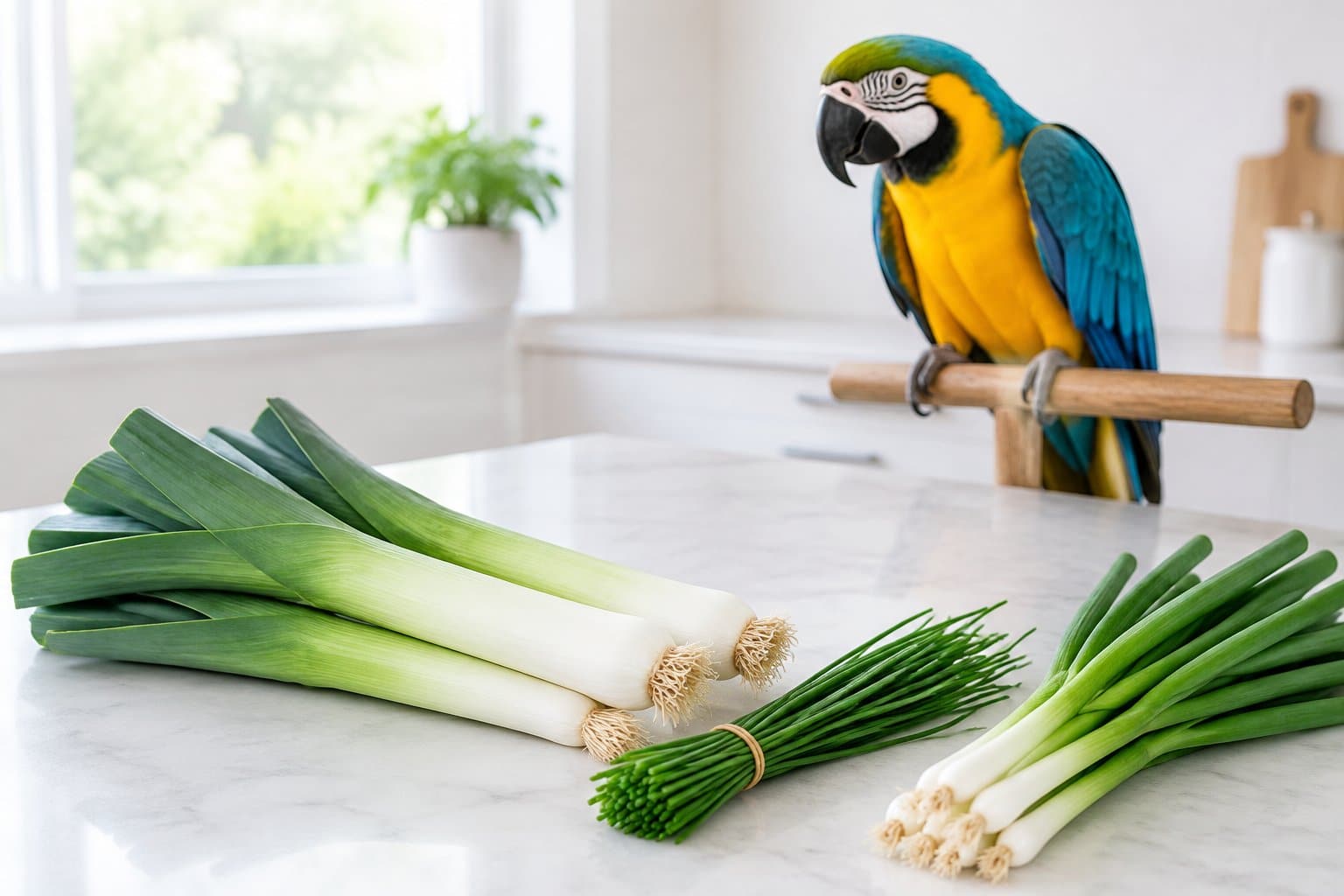
Leeks, chives, and scallions belong to the allium family, along with onions and garlic. All members of this plant family contain compounds called disulfides, which are toxic to parrots. It does not matter whether the vegetable is raw, cooked, dried, or powdered. The toxic compounds remain active no matter how you prepare the food.
These compounds damage red blood cells and can lead to a condition called hemolytic anemia. This happens when red blood cells break down faster than your parrot’s body can replace them. Reduced oxygen delivery throughout the body is the result, which puts real strain on your bird’s organs.
You should watch for weakness, pale coloring around the beak or feet, rapid breathing, or unusual lethargy. These signs can take time to appear, since damage builds up gradually rather than all at once. Even small or occasional amounts fed over time can contribute to harm.
Keep chive garnishes, leek trimmings, and chopped scallions well away from your bird’s reach. This includes food scraps left on counters or in unattended bowls. Many seasoning blends also contain dried versions of these vegetables, so check ingredient labels on any shared snacks carefully.
11. Tomato leaves, stems and unripe tomatoes
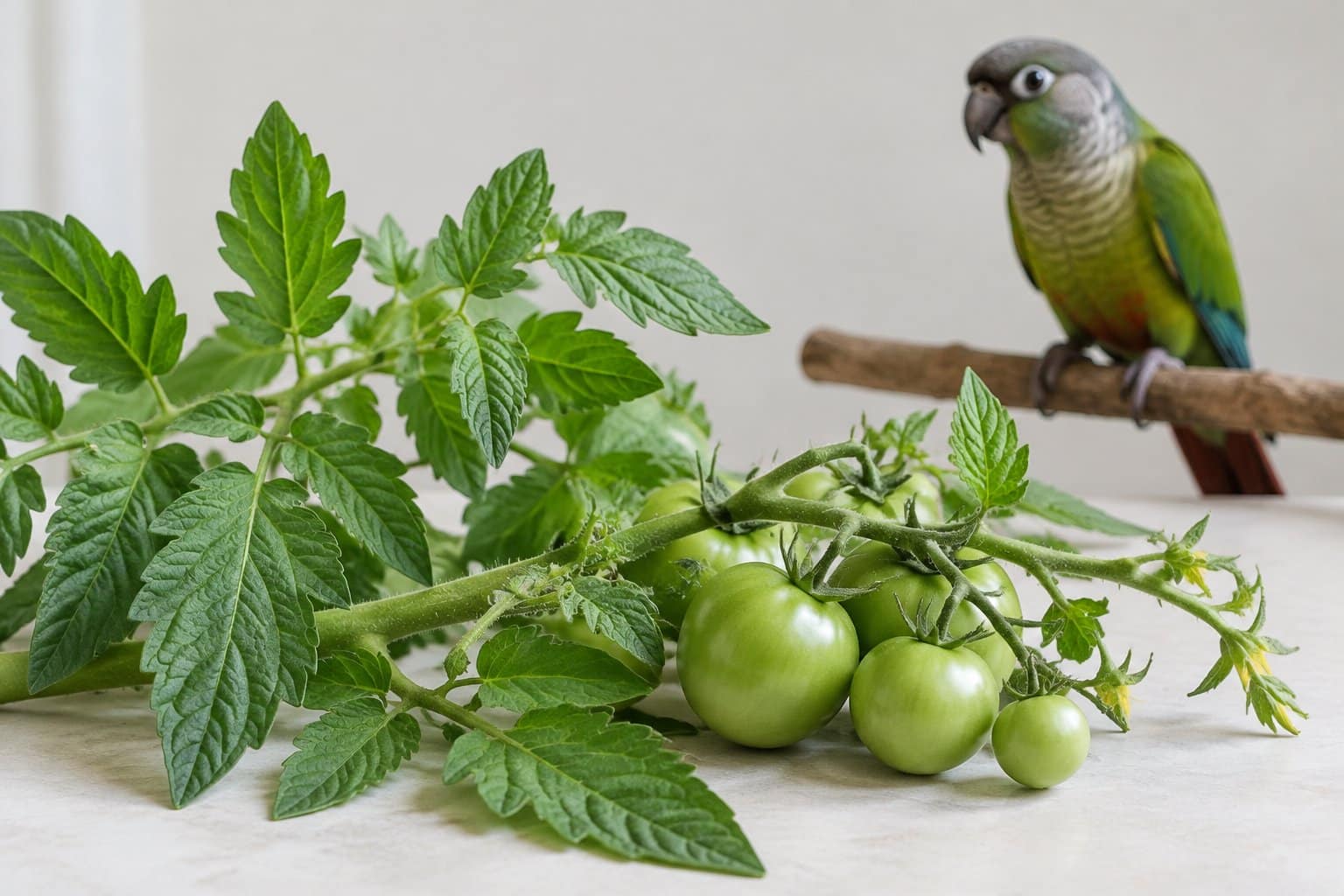
Tomatoes belong to the nightshade family, and this matters for your parrot’s safety. The green parts of the plant, including the leaves, stems, and vines, contain solanine and tomatine. These compounds are toxic to birds and can cause real harm even in small amounts.
Unripe green tomatoes carry these same toxins. Only the fully ripened red flesh is considered reasonably safe for your bird, and even then it should be offered sparingly.
If your parrot nibbles on tomato leaves or stems, you may notice digestive upset, vomiting, or diarrhea. Some birds show signs of weakness or lethargy after ingesting toxic plant material. In more serious cases, neurological symptoms can appear.
Your parrot’s curiosity can lead it toward garden plants or kitchen scraps without you realizing it. If you grow tomatoes at home, keep your bird away from the plants entirely, not just the fruit. Discarded stems or vines in your kitchen trash can also pose a risk if your parrot has access to them.
When offering ripe tomato, remove all traces of stem and leaf first. Watch your bird closely after introducing any new food, and contact your avian vet if you notice unusual symptoms.
12. Apple seeds
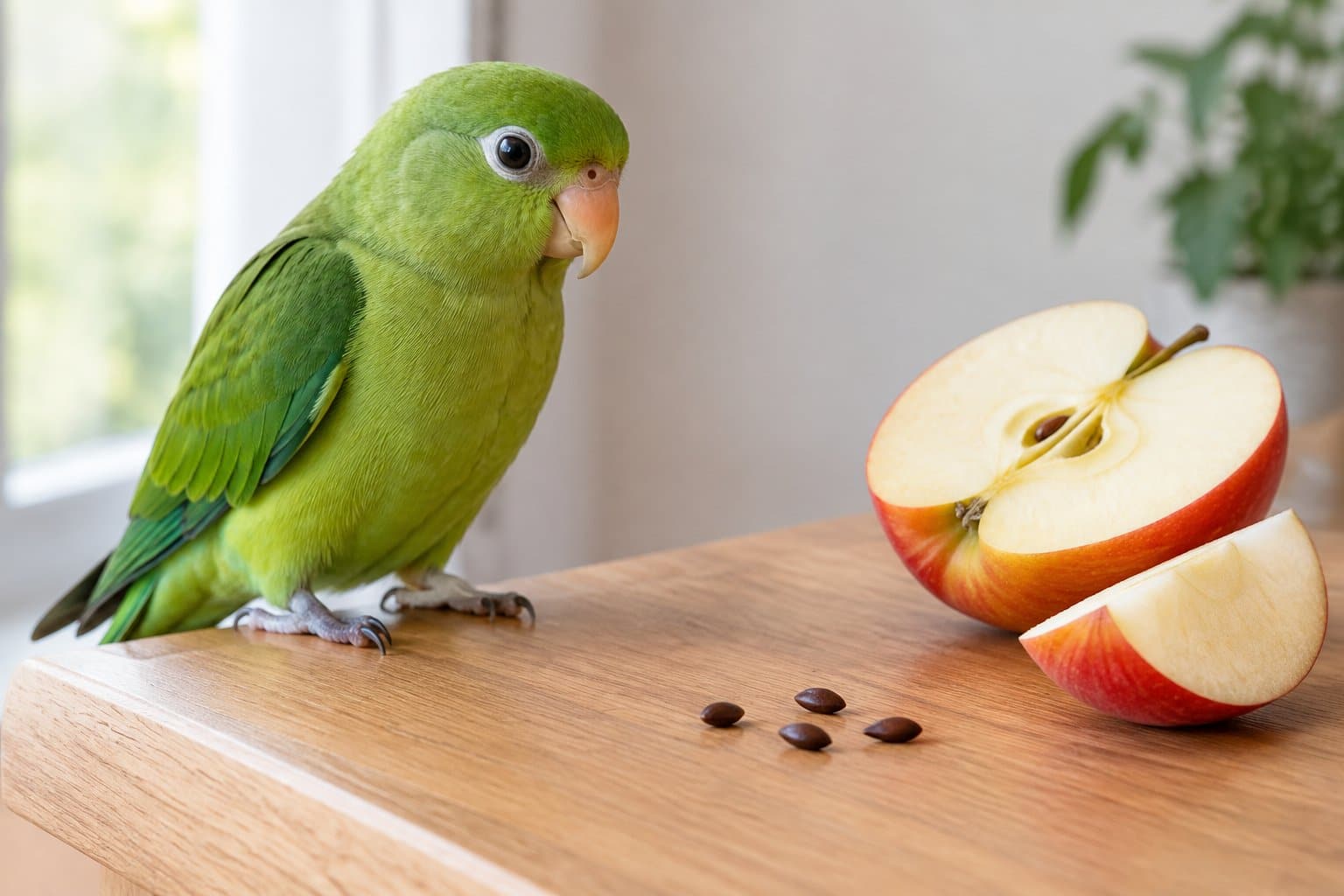
The apple itself is fine for your parrot. The seeds are the problem.
Apple seeds contain a compound called amygdalin, which releases cyanide when it breaks down during digestion. This is a true toxin, not an exaggeration or a myth.
A few seeds from one apple slice won’t likely cause harm to your bird. The risk comes from regular exposure or larger amounts, since cyanide builds up and interferes with how cells use oxygen.
If your parrot eats a significant number of seeds, you might see symptoms like difficulty breathing, weakness, or an unsteady appearance. In serious cases, cyanide poisoning can affect the heart and nervous system.
The simplest solution is to remove the core and seeds before offering apple slices to your bird. This takes only a few seconds and eliminates the risk entirely.
You don’t need to avoid apples altogether. Just treat the seeds the way you’d treat any other known toxin in your kitchen: keep them away from your parrot.
13. Cherry, peach, apricot and plum pits
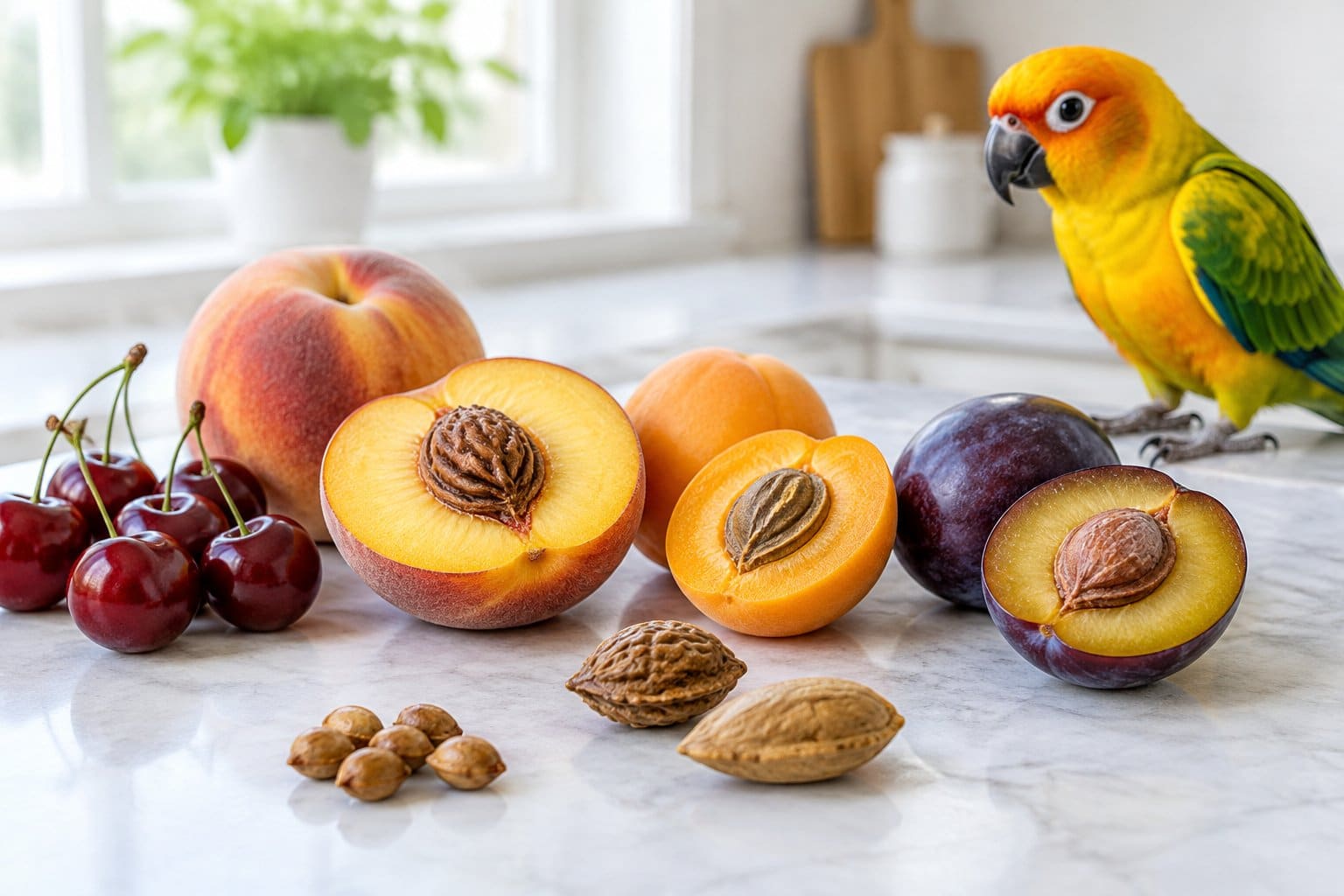
The flesh of these fruits is fine for your parrot, but the pits are not. Inside each pit is a compound called amygdalin, which breaks down into cyanide when it’s chewed or digested.
Your parrot’s strong beak is built for cracking tough shells, which makes this risk worse. A pit that would pass through a human harmlessly can be opened and consumed by a bird without much effort.
Cyanide poisoning interferes with how cells use oxygen. You might notice difficulty breathing, weakness, or collapse if exposure occurs.
Even small amounts matter here, since birds are so much smaller than humans. There’s no safe quantity of pit material you should allow into your bird’s diet.
The safest approach is removing pits completely before offering any slices of these fruits.
Stick to the fruit itself in moderate amounts, and treat the pit as kitchen waste rather than anything your parrot should have access to.
14. Green or raw potatoes
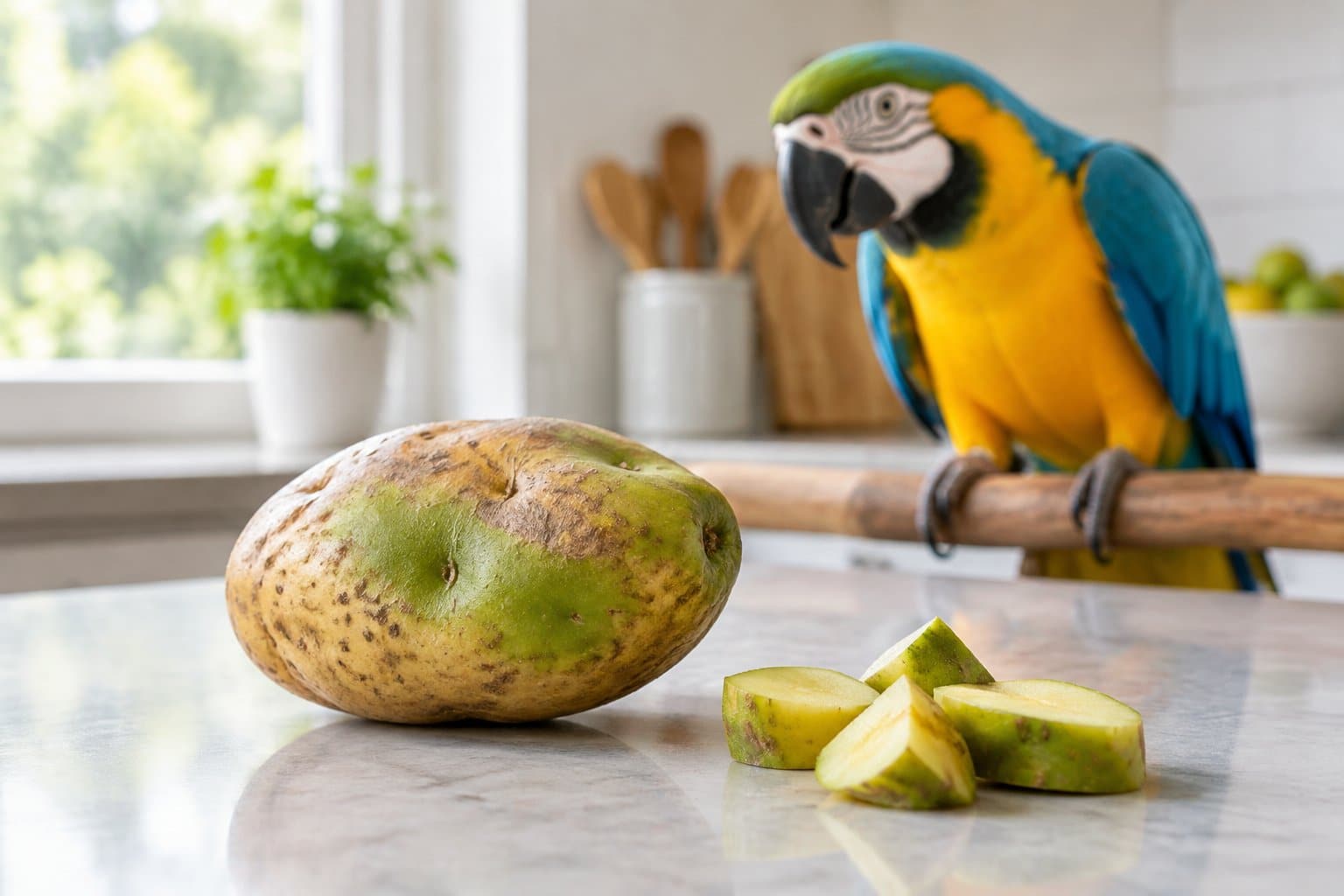
Potatoes seem harmless since you eat them all the time, but the way you prepare them matters a lot for your parrot. Raw potatoes, and any potato with green-tinted skin or sprouts, contain solanine. This is a natural toxin the plant produces, and it does not break down just because the potato looks fine otherwise.
Solanine affects your bird’s nervous system and digestive tract. You might notice vomiting, diarrhea, weakness, or tremors if your parrot eats enough of it. In more serious cases it can affect breathing and heart function, so this isn’t something to brush off as minor stomach upset.
Cooking does not reliably destroy solanine, so cutting away green spots, sprouts, and skin matters more than how long you cook it. A small amount of plain, fully cooked, peeled potato is generally considered fine as an occasional treat. Even then, you’re not giving your bird much nutritional value since potatoes are mostly starch.
Your safest move is skipping green or raw potatoes entirely and checking skins carefully before offering any potato at all. When in doubt, choose a vegetable you know is safe rather than risking exposure to solanine.
15. Raw or undercooked dried beans
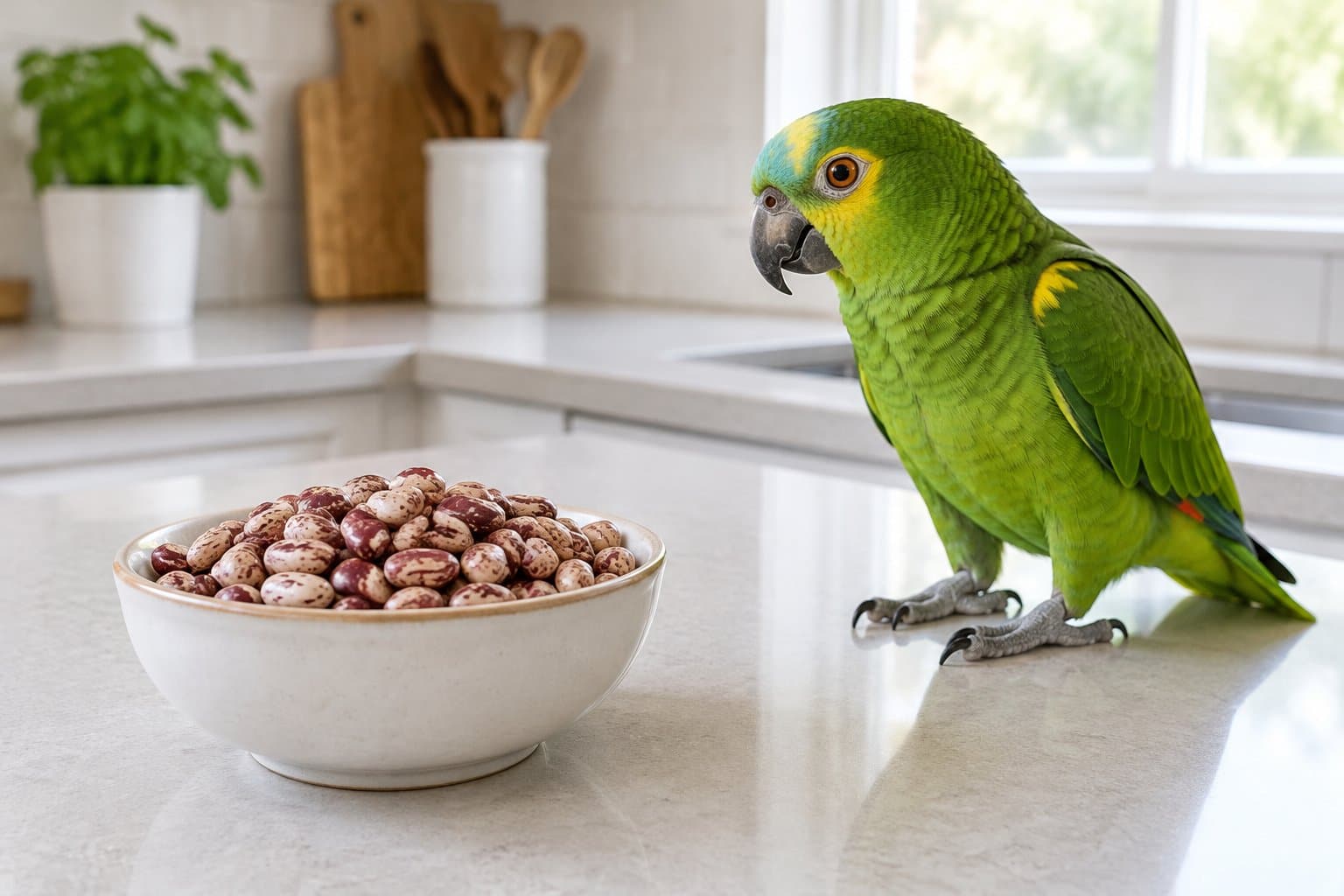
Raw and undercooked dried beans, including kidney beans, contain a compound called phytohemagglutinin. This lectin is toxic to parrots and can cause serious illness even in small amounts.
If your parrot eats raw or undercooked beans, you may notice vomiting, diarrhea, or rapid breathing. In severe cases, this toxin can be fatal, so it’s not something to take lightly.
The good news is that cooking beans thoroughly breaks down phytohemagglutinin and makes them safe to eat. Boiling dried beans until they’re fully soft removes the danger, so cooked beans can actually be a healthy addition to your parrot’s diet.
The risk comes specifically from beans that are raw, undercooked, or only partially soaked.
As an owner, always cook dried beans completely before offering them to your bird. Never assume soaking alone is enough, since soaking doesn’t eliminate the toxin the way proper cooking does. When in doubt, skip beans unless you’re certain they’ve been cooked all the way through.
16. Raw peanuts in the shell
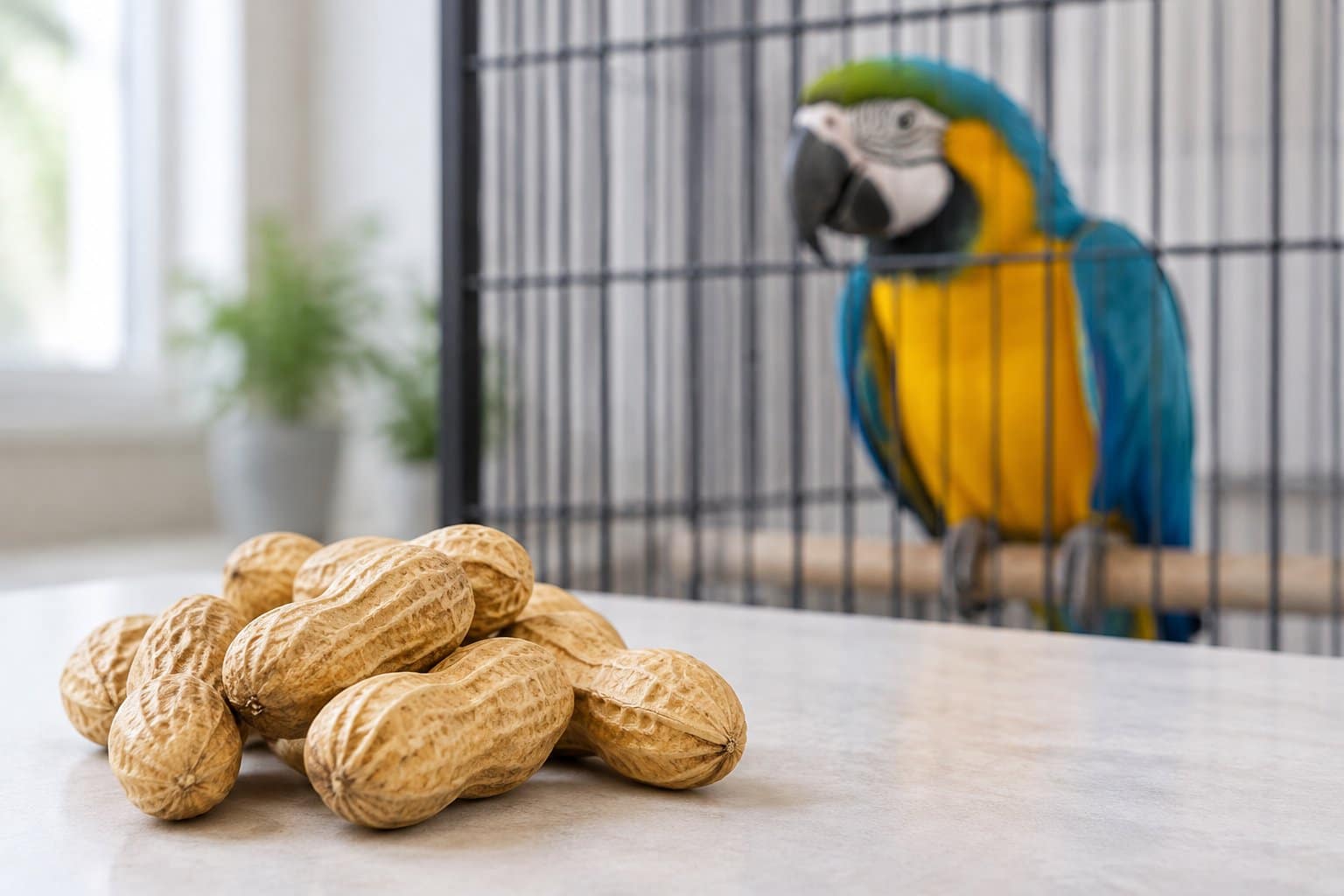
Raw peanuts in the shell carry a real risk of mold contamination, specifically from a fungus called Aspergillus flavus. This mold produces aflatoxin, a toxin that targets the liver.
Shells trap moisture, and that damp environment is exactly what mold needs to grow. Even if the peanut inside looks fine, you can’t always tell by sight whether aflatoxin is present.
Your parrot’s liver is especially sensitive to this toxin. Repeated exposure, even in small amounts, can lead to liver damage over time. Signs of trouble include lethargy, poor appetite, and changes in droppings, though damage can occur before you notice obvious symptoms.
Roasting peanuts reduces aflatoxin levels and lowers the risk considerably, which is why roasted, unsalted peanuts are generally considered a safer option than raw ones. If you do offer peanuts, buy from a reputable source, check for proper storage, and avoid anything that looks discolored, smells off, or seems past its freshness date.
When in doubt, skip raw peanuts in the shell entirely. The potential liver risk isn’t worth it for a snack your bird can get safely elsewhere.
17. Rhubarb
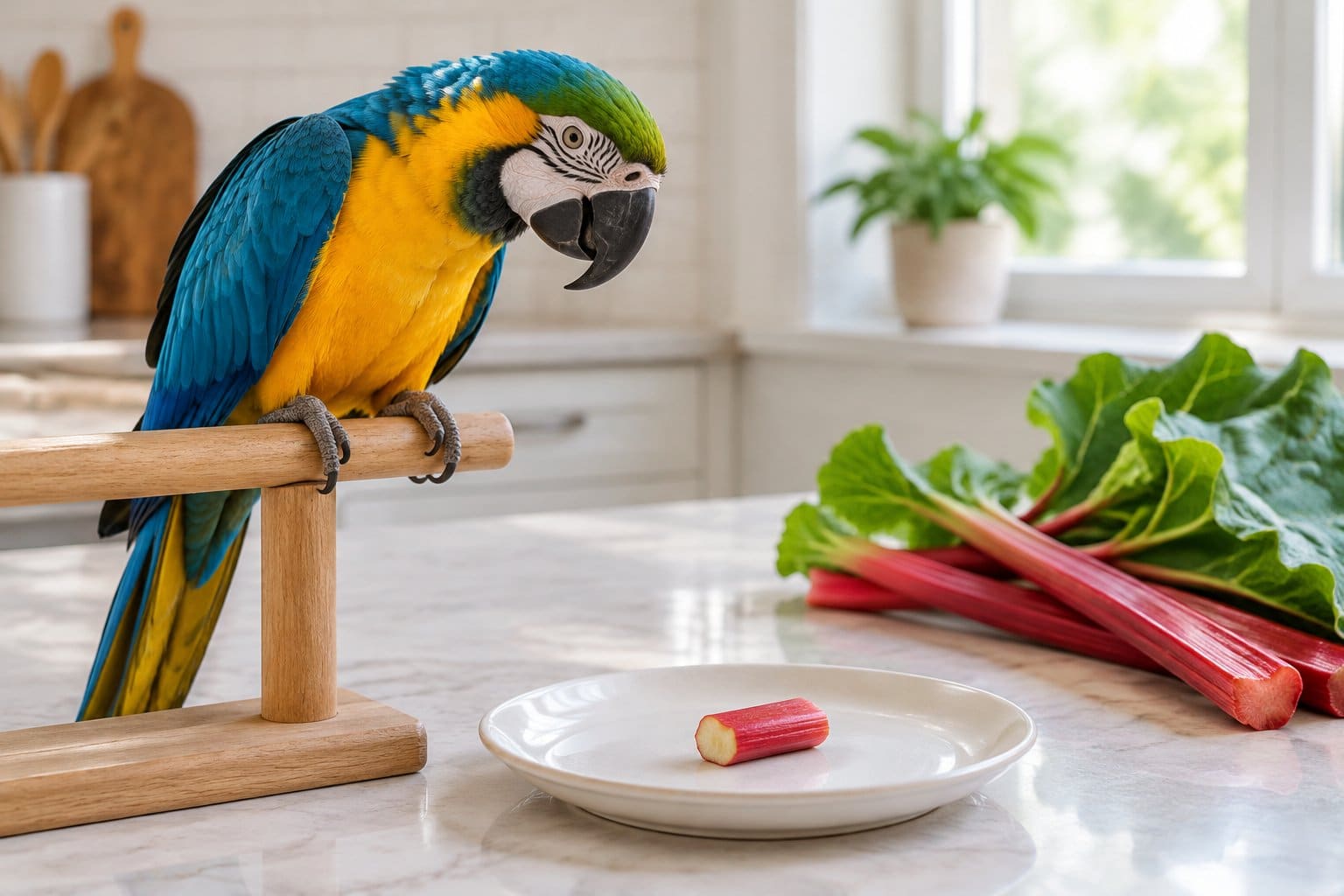
Rhubarb is another plant you should keep out of your parrot’s reach entirely. The leaves contain high concentrations of oxalic acid and soluble oxalates, compounds that bind calcium in the body and can cause serious kidney damage.
The stalks contain lower levels of these compounds, but that doesn’t make them a safe choice for your bird. A parrot’s small body size means even modest amounts can cause problems that wouldn’t affect a larger animal.
If your parrot ingests rhubarb, you might notice symptoms like tremors, weakness, or difficulty breathing. Kidney damage can develop over time and may not show obvious signs until the situation becomes serious.
You should also be cautious if you grow rhubarb in your garden or keep it in your kitchen. Fallen leaves, trimmed stalks, or compost containing rhubarb scraps can all pose a risk if your bird has access to them.
Given the lack of any real nutritional benefit for your parrot, there’s no reason to take the chance. Keep rhubarb, in all its forms, away from your bird’s environment and diet.
18. Moldy or spoiled food
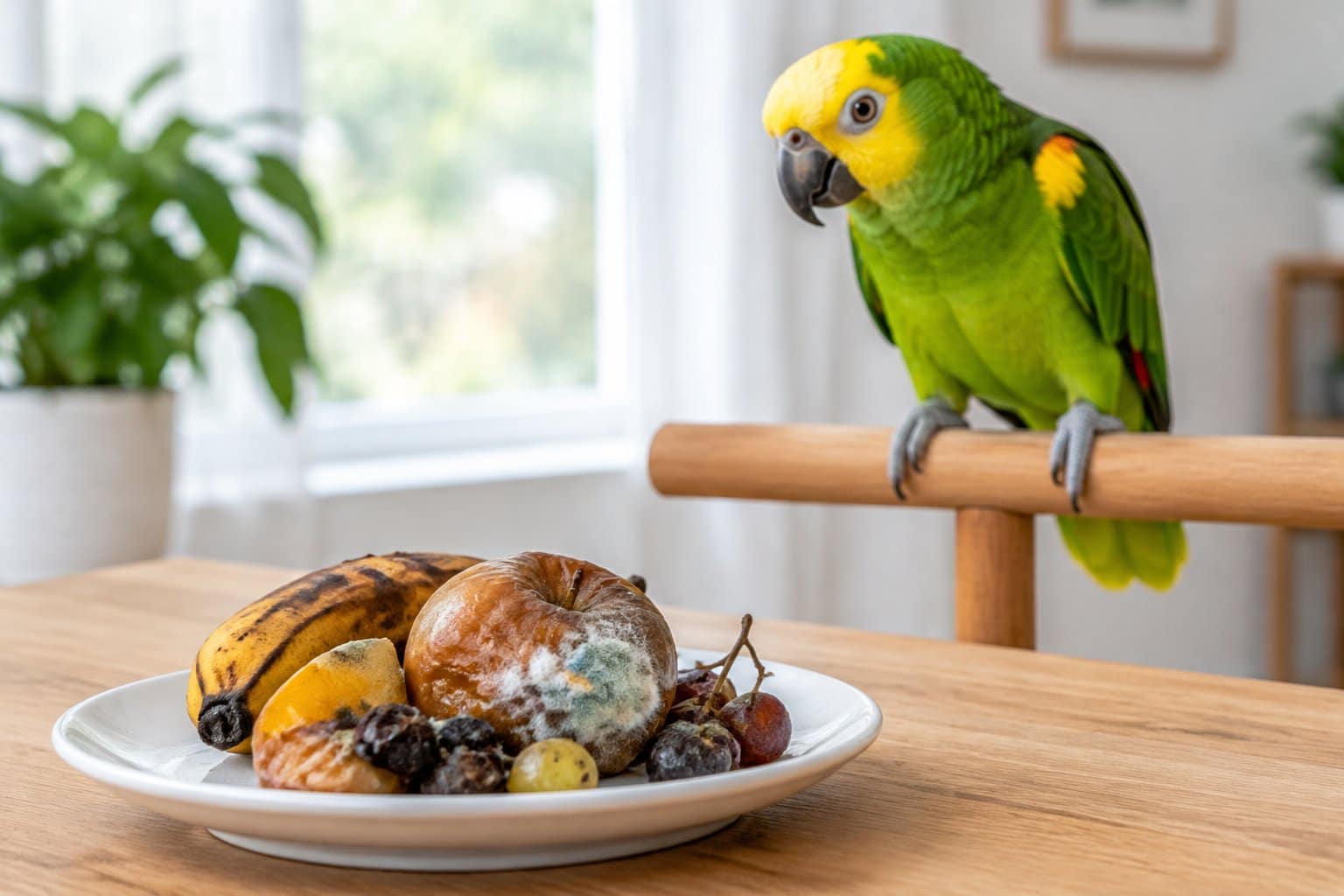
Moldy or spoiled food should never go into your parrot’s bowl, even if the rest of the piece looks fine. Mold often spreads through food in ways you can’t see, and some molds produce mycotoxins that are dangerous to birds in small amounts.
These toxins can cause liver damage, neurological symptoms, and digestive upset. Birds are especially sensitive because of their small body size and fast metabolism, so even a small amount of contaminated food can cause a noticeable reaction.
You should check fruits, vegetables, nuts, and seeds carefully before offering them. Nuts and grains are particularly risky because mold can grow inside the shell or husk without any obvious outward signs.
Spoiled food, even without visible mold, can also harbor harmful bacteria that lead to digestive problems. Watch for vomiting, diarrhea, lethargy, or loss of appetite after feeding, since these can signal a reaction to contaminated food.
Store your parrot’s food properly and discard anything that smells off, looks discolored, or has been sitting out too long. A good rule is simple: if you wouldn’t eat it yourself, don’t offer it to your bird either.
19. Salty chips, pretzels and crackers
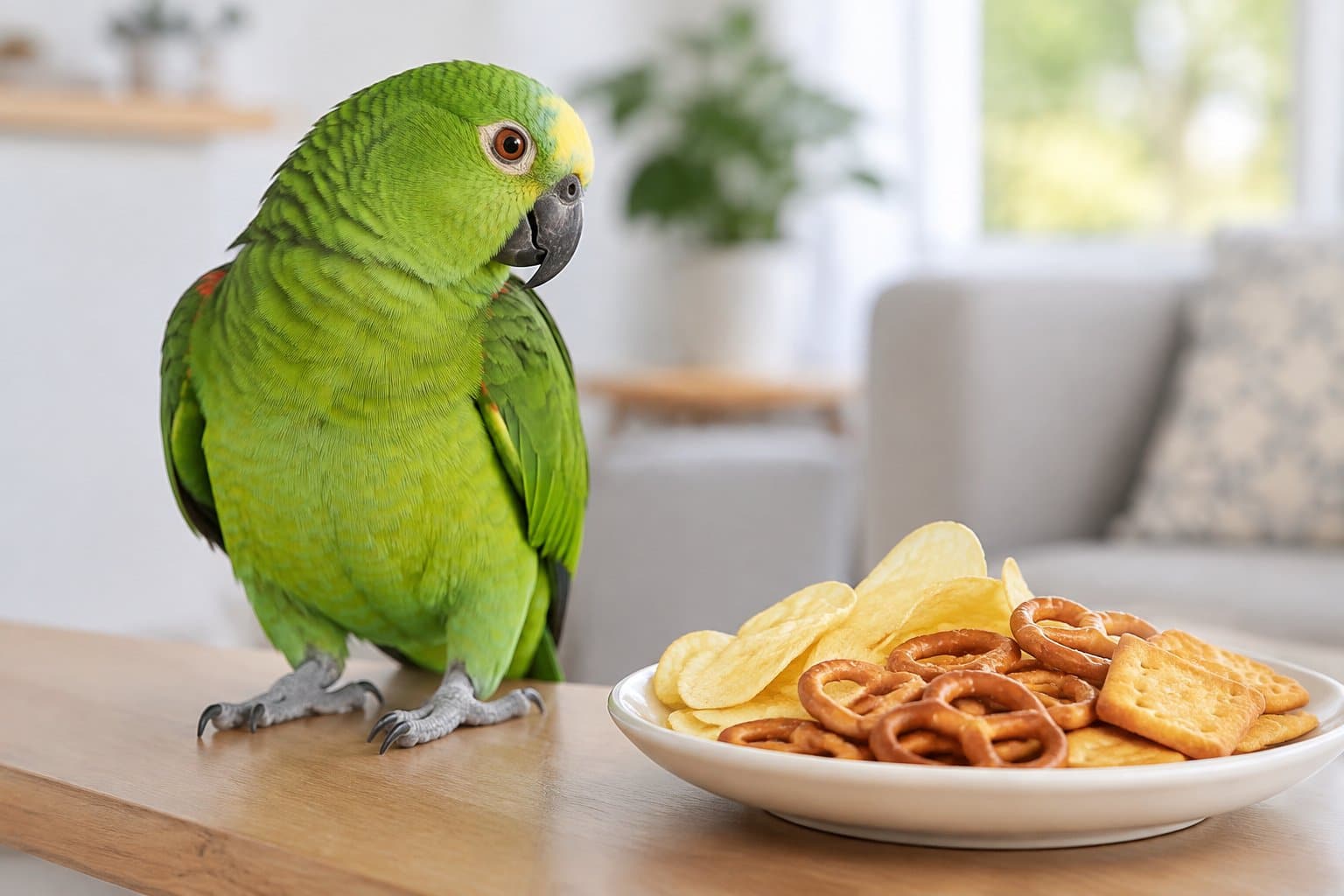
A parrot’s body is built to handle only a small amount of sodium. When you hand over a chip, a pretzel, or a salted cracker, you’re giving your bird far more salt than its system can safely manage.
Because parrots are so small, even one salty snack can throw off their fluid and electrolyte balance quickly.
Watch for excessive thirst and increased urination after your parrot eats something salty. These are early warning signs that its kidneys are working overtime to compensate.
Over time, or in more severe cases, high sodium intake can lead to dehydration and kidney strain. In the worst situations, this can progress to kidney failure, which can be fatal.
You don’t need to eliminate all crunchy snacks from your parrot’s diet. Instead, choose unsalted alternatives like plain air-popped popcorn or unsalted rice cakes.
Keep processed, salty human snacks out of reach entirely. Your parrot may beg for a bite, but its long-term health depends on you saying no to salt.
20. Raw meat and undercooked eggs
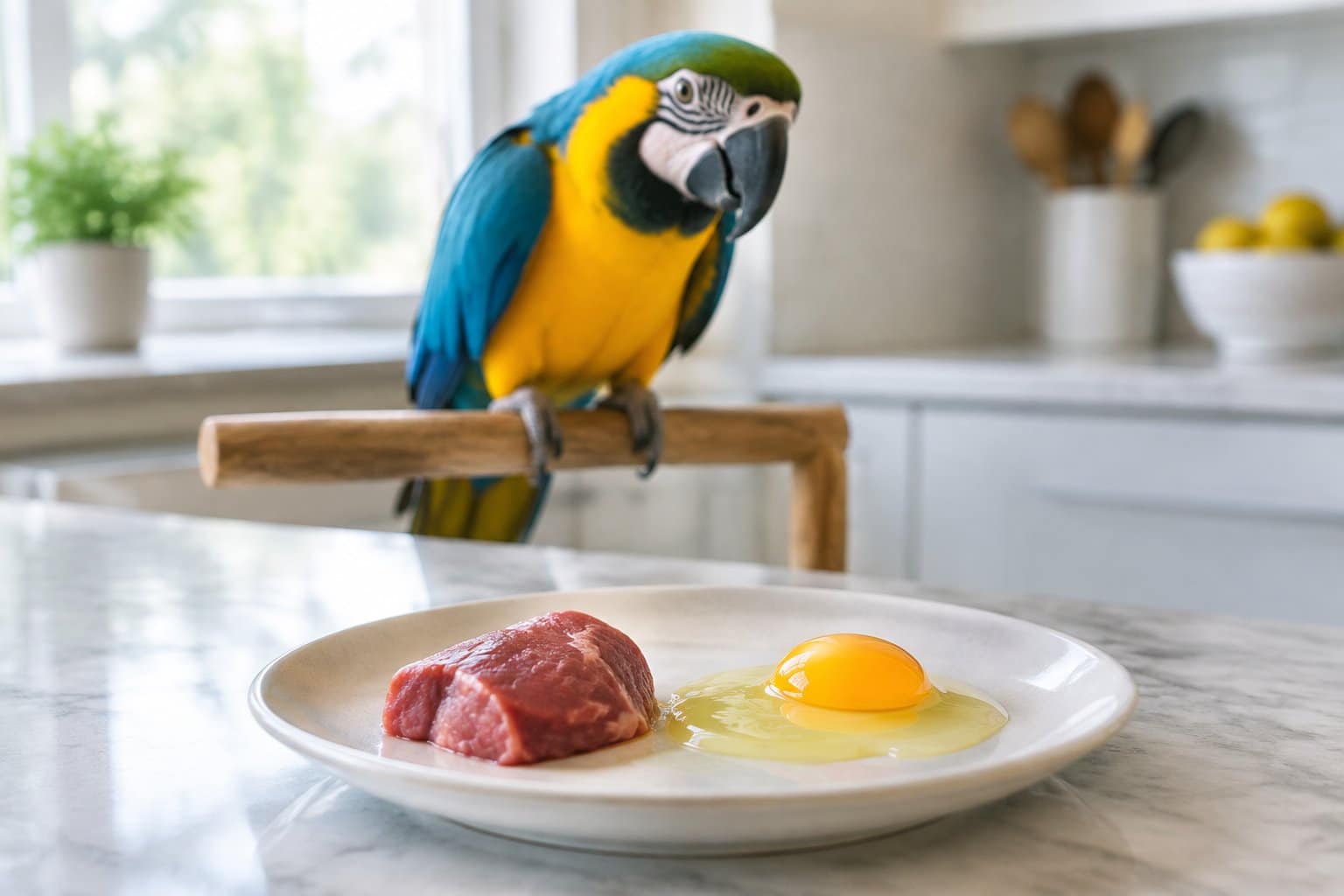
You should never feed your parrot raw or undercooked meat, fish, poultry, or eggs. These foods can carry bacteria like Salmonella and Campylobacter, which cause serious illness in birds.
Your parrot’s digestive and immune systems are not built to handle the bacterial load found in raw animal products. Even small amounts can trigger an infection.
Watch for signs like diarrhea, lethargy, loss of appetite, and vomiting. These symptoms can appear quickly and may worsen without treatment, so contact an avian vet if you notice them.
If you want to share eggs or meat with your parrot, cook them thoroughly first. Plain, fully cooked chicken or scrambled eggs without seasoning are safer choices.
Your bird’s small body size means it has less ability to fight off infection compared to larger animals, so prevention matters more than treatment here.
21. Bacon, deli meat and hot dogs
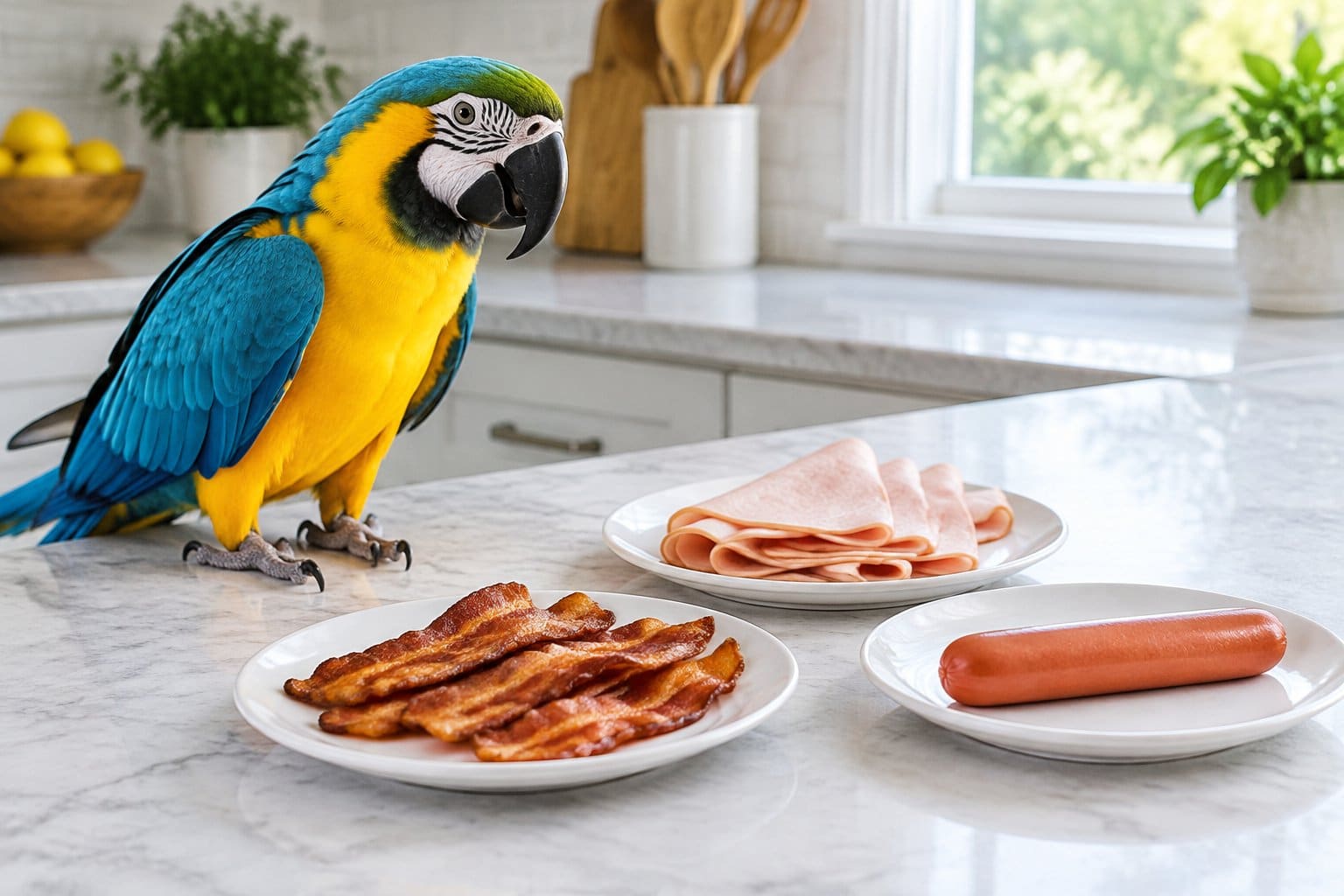
Processed meats like bacon, deli meat, and hot dogs are loaded with salt, and parrots have a very low tolerance for sodium. Too much salt disrupts your bird’s fluid balance and can lead to dehydration, kidney strain, or worse.
These meats are also high in fat and preservatives, including nitrates and nitrites, which your parrot’s digestive system is not built to process. Over time, this can contribute to liver problems and obesity.
Watch for signs like increased thirst, lethargy, or digestive upset after your bird eats these foods. In severe cases, excess salt intake can cause more serious symptoms like tremors or seizures.
Even small amounts of bacon grease or hot dog bits dropped during a meal can add up if you share food regularly. Your bird’s body simply isn’t designed to handle the sodium and additives found in cured or processed meats.
Stick to plain, unseasoned proteins if you want to offer your parrot a meat-based treat. Keep bacon, deli meat, and hot dogs off the menu entirely to protect your bird’s long-term health.
22. An all-seed diet
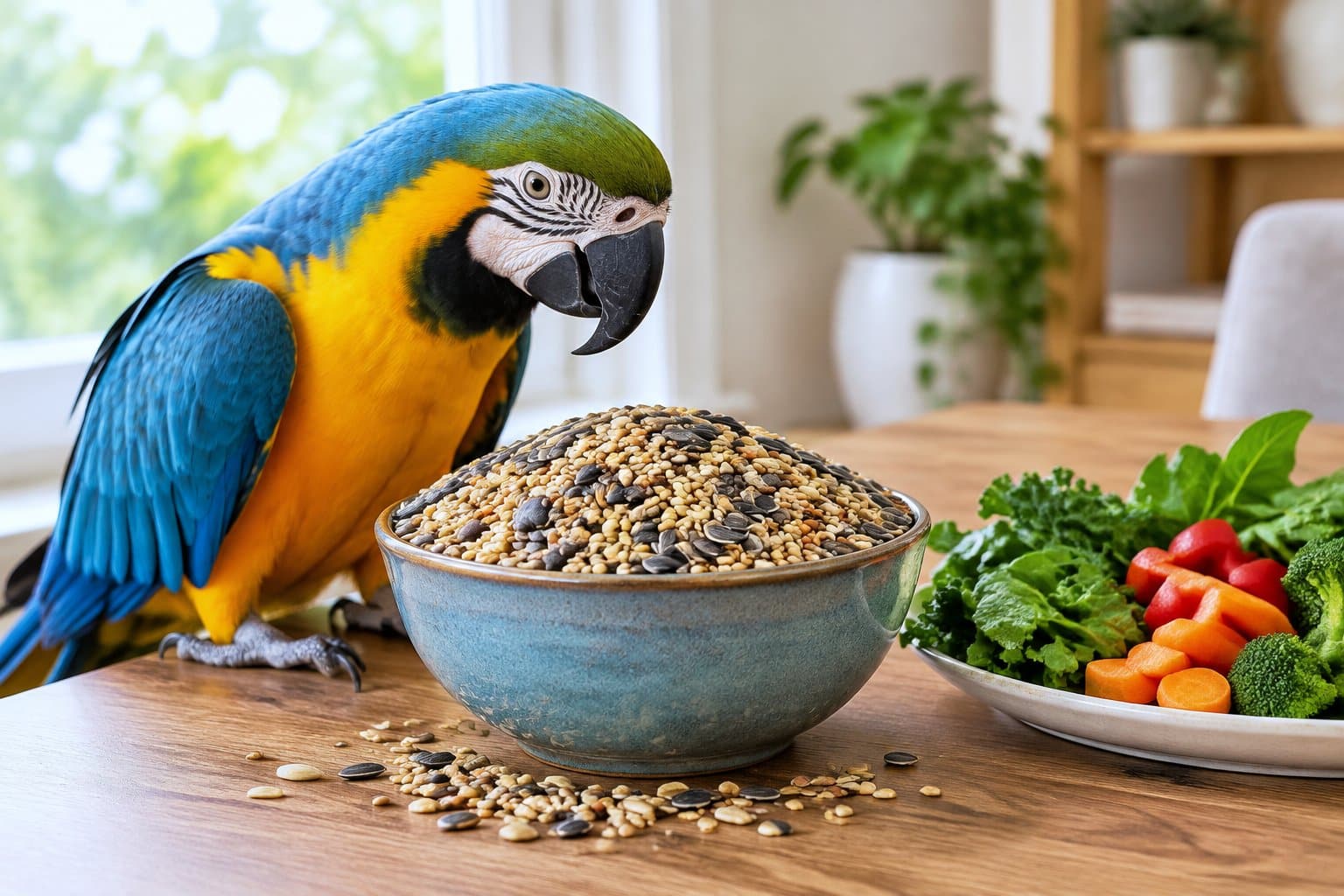
A diet made up entirely of seeds is one of the most common mistakes you can make as a parrot owner, even though it seems natural. Seeds are high in fat and low in many essential vitamins and minerals, so relying on them as the main food source leaves your bird undernourished over time.
Parrots fed only seeds often develop deficiencies in vitamin A, calcium, and other nutrients. This can weaken the immune system, affect feather quality, and lead to reproductive or organ problems down the line.
Seed mixes also encourage picky eating. Many parrots will dig through a bowl and only eat their favorite seeds, which narrows their nutrition even further and makes the imbalance worse.
Obesity is another risk, since seeds are calorie-dense but nutrient-poor. Over months and years, this combination can shorten your bird’s lifespan and reduce its quality of life.
A balanced diet should center on a quality formulated pellet, with fresh vegetables, some fruit, and a limited amount of seeds as a treat rather than a staple. If your parrot has been on an all-seed diet, talk to an avian vet about safely transitioning to better nutrition.
23. Fried foods
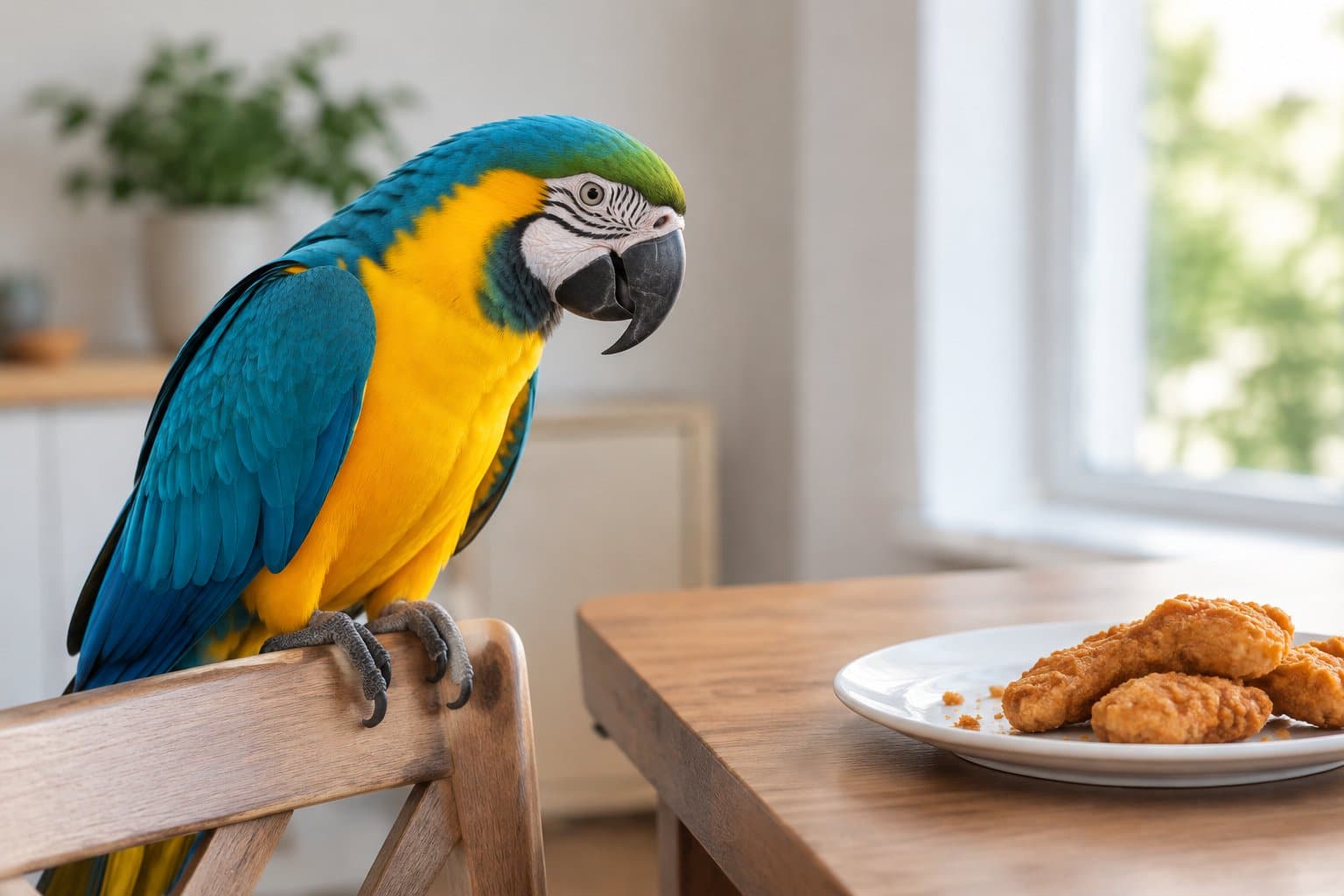
Fried foods are not a good choice for your parrot, even as an occasional treat. The heavy oil content is hard for a parrot’s digestive system to process efficiently.
Most pet parrots do best on a fairly low-fat diet. When you offer fried chicken, chips, or other oily foods, you’re giving your parrot far more fat than its body needs.
Over time, a diet that includes fried foods can contribute to obesity in your bird. Parrots gain weight easily, and excess fat puts strain on their heart and liver.
You should also watch for signs of digestive upset after your parrot eats greasy food, including lethargy or loose droppings. Fried foods are often cooked with salt, seasonings, or batters that add further risk, since many spices and high sodium levels aren’t suitable for birds either.
If you want to share food with your parrot, choose plain, unfried versions of what you’re eating instead. Steamed or baked alternatives give your bird the chance to enjoy mealtime with you without the added fat and salt that fried foods bring.
24. Sugary candy
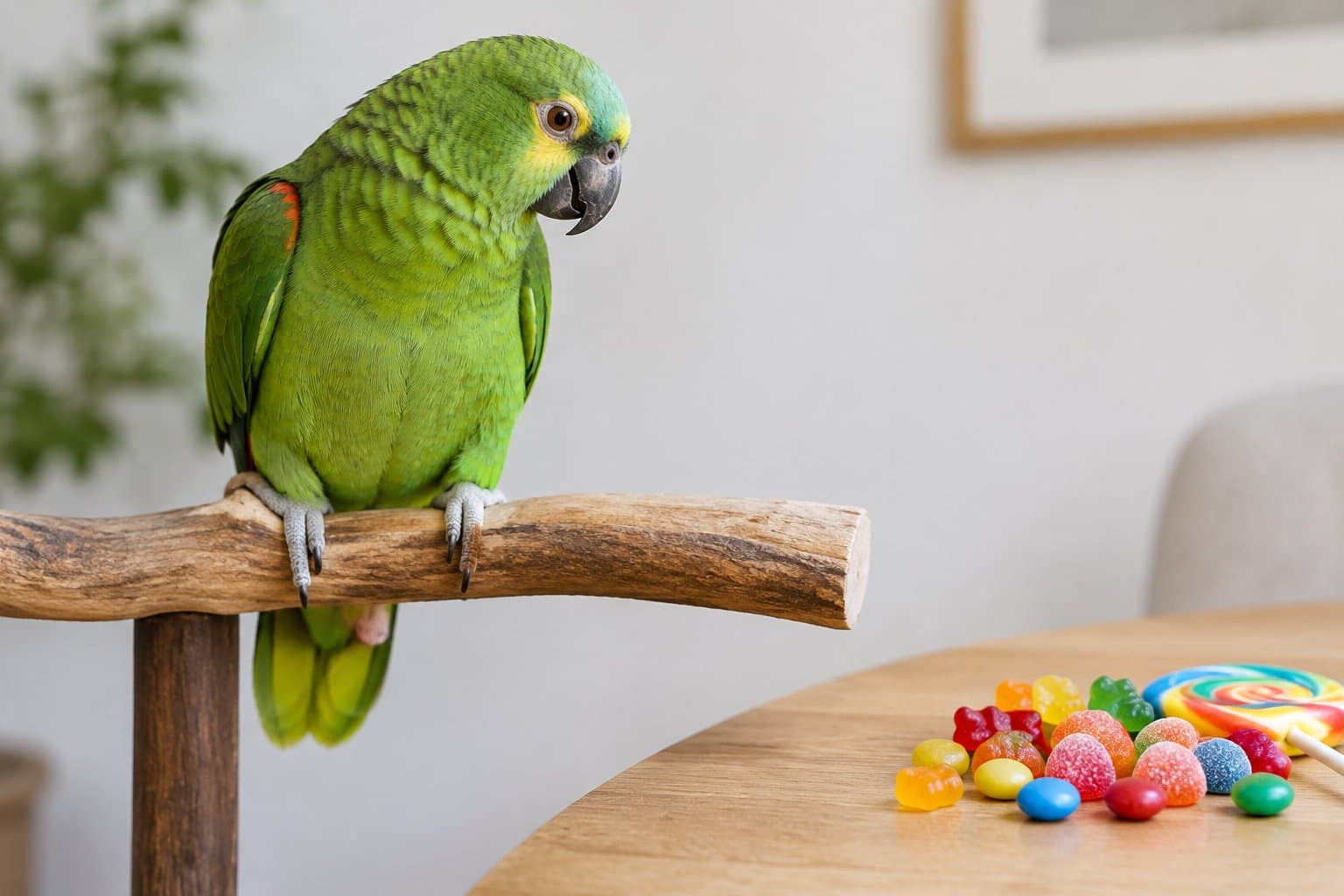
Candy has no place in a parrot’s diet. It’s packed with refined sugar and offers no nutritional value your bird actually needs.
Their digestive systems are built for seeds, fruits, vegetables, and other whole foods, not processed sweets. When you feed your bird candy, you’re putting extra strain on its system for no real benefit.
Regular sugar intake can contribute to obesity in parrots, which raises the risk of fatty liver disease and other health problems. It can also disrupt the balance of healthy bacteria in your bird’s gut, leading to digestive upset.
Some candies pose an even bigger threat. Sugar-free varieties often contain xylitol, which is toxic to dogs and should never be given to your bird either. Hard candies can also become a choking hazard if your parrot tries to break off pieces.
If your bird seems lethargic, has loose droppings, or shows changes in appetite after eating something sugary, contact your avian vet. Stick to natural, bird-safe treats instead of sharing sweets from your own plate.
25. Sugar-free gum containing xylitol
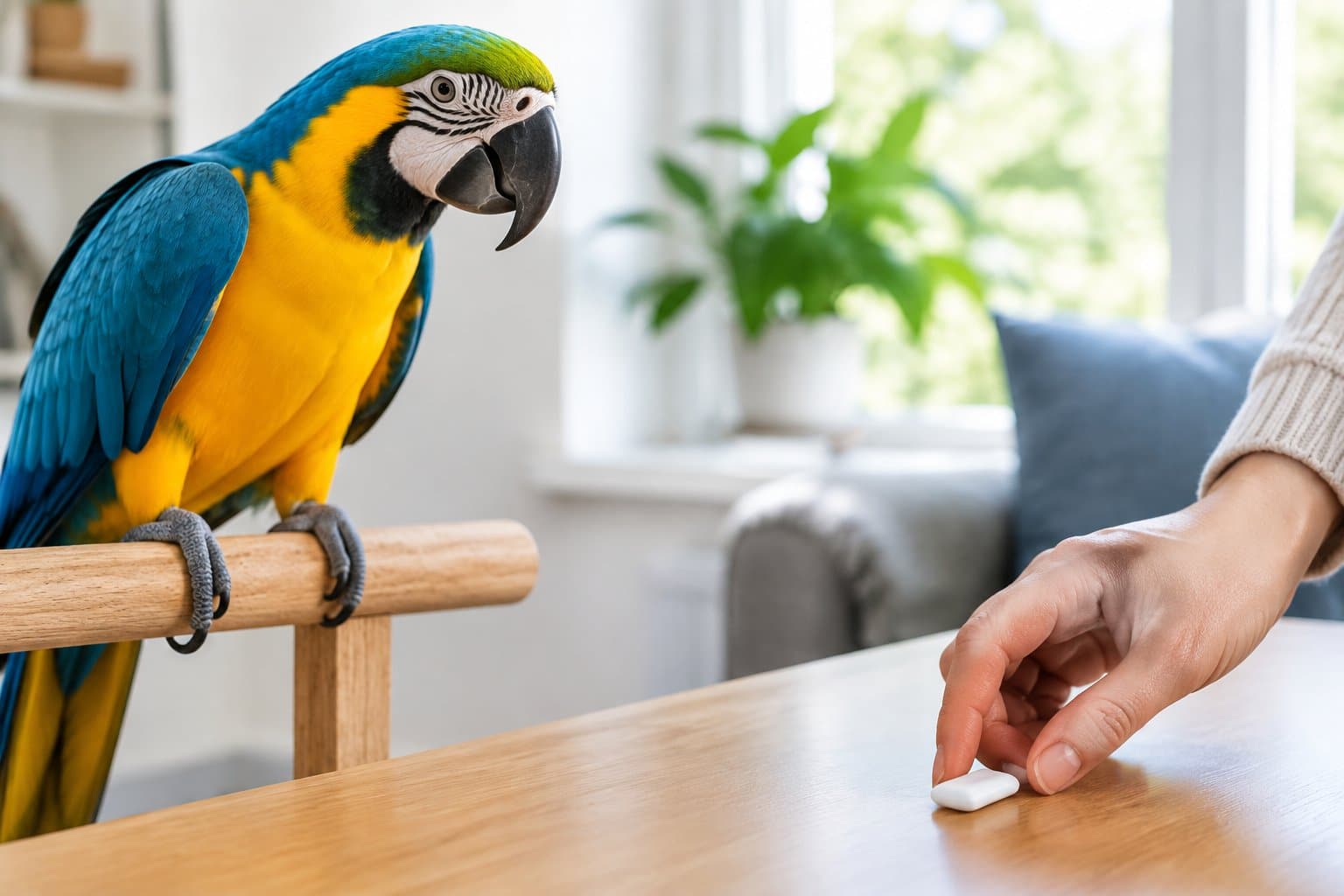
Sugar-free gum is an easy item to overlook, but it belongs on your list of things to keep far away from your parrot. The culprit is xylitol, a sugar substitute used in many “sugar-free” products. It’s marketed as a safer alternative to sugar for humans, but that doesn’t apply to birds.
In dogs, xylitol causes a sudden, dangerous drop in blood sugar. It hasn’t been studied much in parrots, so avian vets advise treating it as a toxin and not taking the chance.
Xylitol can also cause liver failure in dogs, and a parrot’s small body size means even a tiny amount could have an outsized effect.
Check labels carefully, since xylitol sometimes appears under the name “birch sugar.” It’s not limited to gum, either. You’ll find it in sugar-free mints, candy, and certain brands of peanut butter. Keep all of these items stored well out of your parrot’s reach.
Understanding and Responding to Food Risks
Not every unsafe food acts the same way in your parrot’s body. Some cause immediate, visible harm, while others damage health slowly over weeks or months, and your response needs to match the type of exposure.
Acute Toxicity Versus Long-Term Nutritional Harm
Acute toxins cause rapid, often severe reactions. Avocado, chocolate, caffeine, and alcohol fall into this category, and symptoms can appear within hours of ingestion.
Other foods cause harm through accumulation rather than a single dose. Regularly feeding salty, fatty, or sugary foods won’t kill your parrot in one sitting, but it can lead to obesity, fatty liver disease, or nutrient deficiencies over time.
You should treat these two categories differently. A single accidental bite of chocolate warrants urgent action, while an occasional salty snack requires a dietary correction rather than an emergency response.
Warning Signs After Unsafe Food Exposure
After your parrot eats something unsafe, watch for physical and behavioral changes. Common signs include vomiting, diarrhea, lethargy, and loss of appetite.
You may also notice respiratory distress, such as labored breathing or open-mouth breathing, particularly after exposure to airborne toxins like overheated non-stick cookware. Tremors, seizures, or sudden weakness point to a more severe reaction.
Pay attention to droppings, too. Changes in color, consistency, or frequency can indicate internal distress before other symptoms appear.
Keep a mental note of what your parrot ate and when symptoms started. This timeline helps you and your veterinarian determine the likely cause and severity of the reaction.
When to Seek Emergency Veterinary Care
Some symptoms require immediate veterinary attention rather than at-home monitoring. Contact an avian vet right away if your parrot shows any of the following:
- Difficulty breathing or open-mouth breathing
- Seizures, tremors, or loss of coordination
- Vomiting combined with lethargy
- Known ingestion of avocado, chocolate, or alcohol
- Sudden collapse or unresponsiveness
You shouldn’t wait to see if symptoms improve on their own, especially after known exposure to a highly toxic substance. Avian physiology processes toxins quickly, and delays reduce the chances of a positive outcome.
If possible, bring a sample of the food or packaging to your vet appointment. This helps the veterinarian identify the specific toxin and determine the right treatment approach.
Building a Safer Feeding Routine
A safer feeding routine depends on three things: matching your parrot’s diet to its species, keeping unsafe items physically out of reach, and testing new foods in a controlled way. Each of these reduces risk without requiring you to overhaul your bird’s entire diet overnight.
Balancing Your Parrot’s Diet With Species-Specific Guidance
Different parrot species have different nutritional needs based on their size and natural diet. A budgie’s calorie and fat requirements look nothing like a macaw’s, so a one-size-fits-all feeding chart can do more harm than good.
Use these general starting points, then adjust based on your vet’s input:
- Small parrots (budgies, lovebirds): smaller seed proportion, more leafy greens
- Medium parrots (conures, cockatiels): higher vegetable ratio, limited nuts
- Large parrots (macaws, cockatoos): higher fat tolerance, but still no avocado or salty snacks
Check with an avian vet about your specific species before making major dietary changes. What’s safe in small amounts for one bird can cause problems for another.
Preventing Accidental Access and Cross-Contamination
Most toxic ingestions happen by accident, not through deliberate feeding. Your parrot can grab food off a counter, a plate, or even your fork during a shared meal.
Keep these habits in place at home:
- Store toxic foods (chocolate, onion, garlic) in closed cabinets, not open counters
- Avoid letting your parrot perch near your dining table during meals
- Wash your hands before handling your bird if you’ve eaten something toxic to parrots, like avocado or alcohol
- Use separate utensils and cutting boards for your bird’s food to prevent cross-contamination from raw meat or onion residue
A few seconds of caution before a meal prevents most emergency vet visits.
Introducing New Foods Safely
New foods should be introduced one at a time, in small quantities, so you can monitor your parrot’s reaction. This also makes it easier to identify the cause if a problem does occur.
Follow this basic process:
- Offer a small piece, no larger than a fingernail, of the new food
- Watch for at least 24 hours for signs of digestive upset, lethargy, or unusual droppings
- If no reaction occurs, gradually increase the portion over the following week
Avoid introducing more than one new food within the same 48-hour window. This keeps your tracking accurate and reduces the chance of overwhelming your parrot’s digestive system.


