
The 20 Worst Parrot Foods You Can Buy
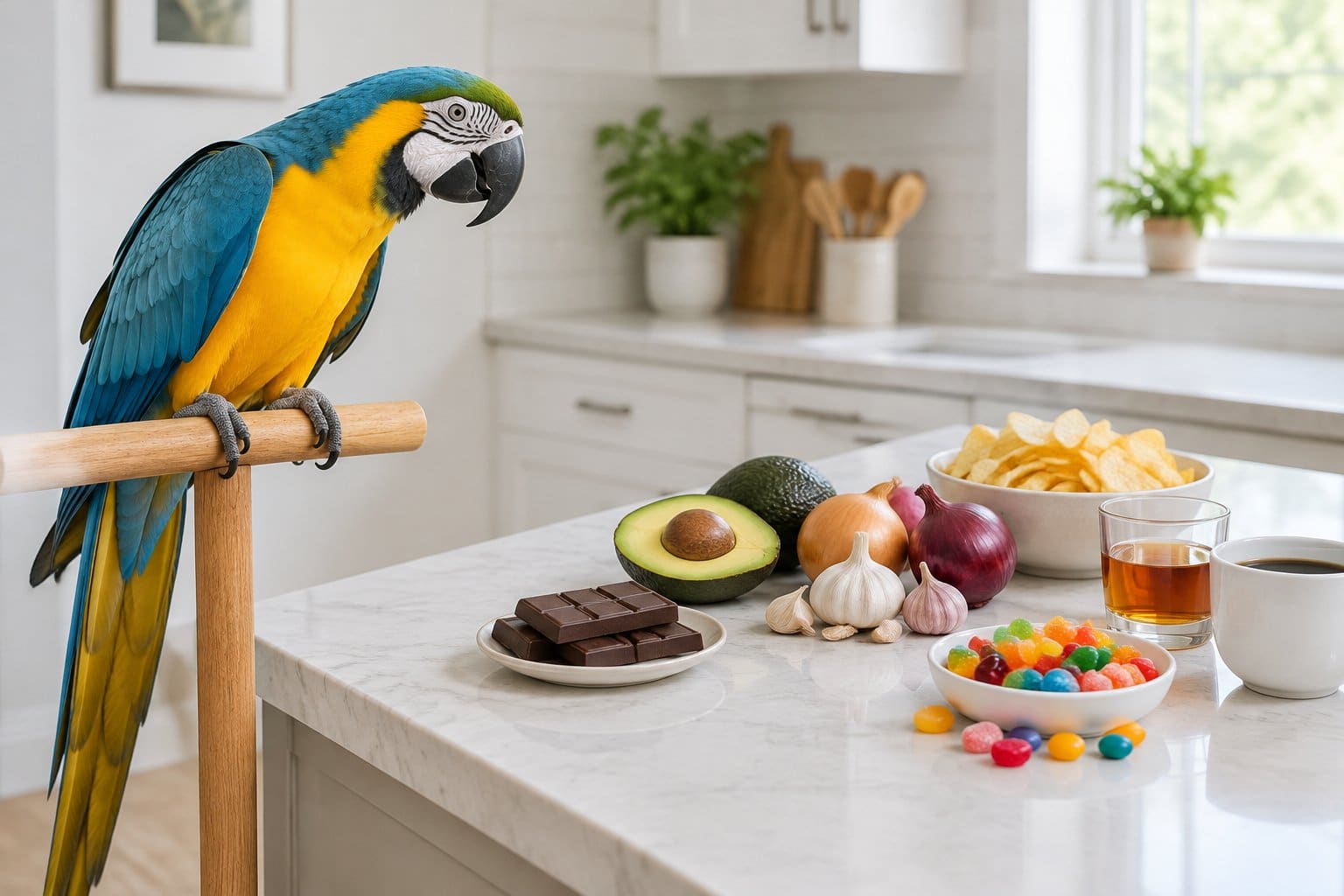
Parrots rely on their owners to choose food that supports their health. Not every product sold as bird food is actually safe or nutritious for them.
Some items marketed for parrots contain ingredients that can cause digestive problems, nutrient deficiencies, or long-term health issues. Knowing which products to avoid helps you protect your bird from unnecessary health risks.
This article looks at common foods and products that fall short of what parrots actually need.
1. All-Seed Mixes
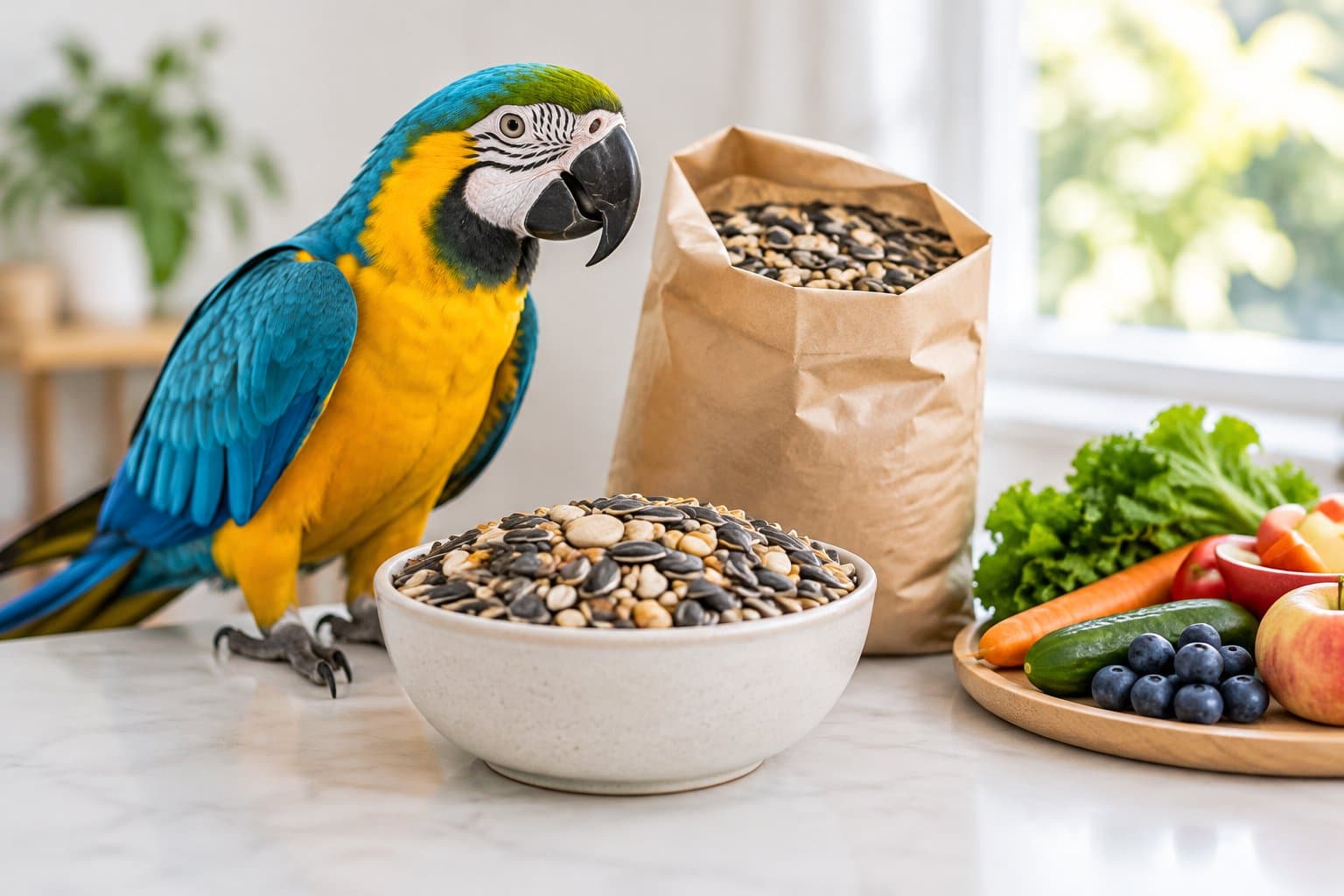
If you fill your parrot’s bowl with an all-seed mix, you’re giving it the option to eat only the parts it likes best. Most mixes contain sunflower seeds, safflower, and millet, and parrots will often pick out the fattiest seeds first and leave the rest behind. This selective eating means your bird misses out on balanced nutrition even when the bag claims to be complete.
Seeds are naturally high in fat and low in essential vitamins and minerals, including calcium and vitamin A. Over time, a seed-heavy diet can contribute to obesity, fatty liver disease, and weakened immune function in your bird. Larger parrot species in particular were not designed to live on seeds alone, despite how common this feeding style used to be.
Avian vets generally recommend shifting your parrot to a diet based mostly on formulated pellets, supplemented with fresh vegetables and some fruit. Pellets are made so your bird can’t pick out only the tasty bits, since each piece contains the same nutrition. For larger parrots, seeds should be a small part of the diet or an occasional treat. Small birds such as budgies and cockatiels can eat more seed, but the Merck Veterinary Manual is clear that seeds shouldn’t make up most of any pet bird’s diet.
2. Sunflower-Heavy Seed Blends
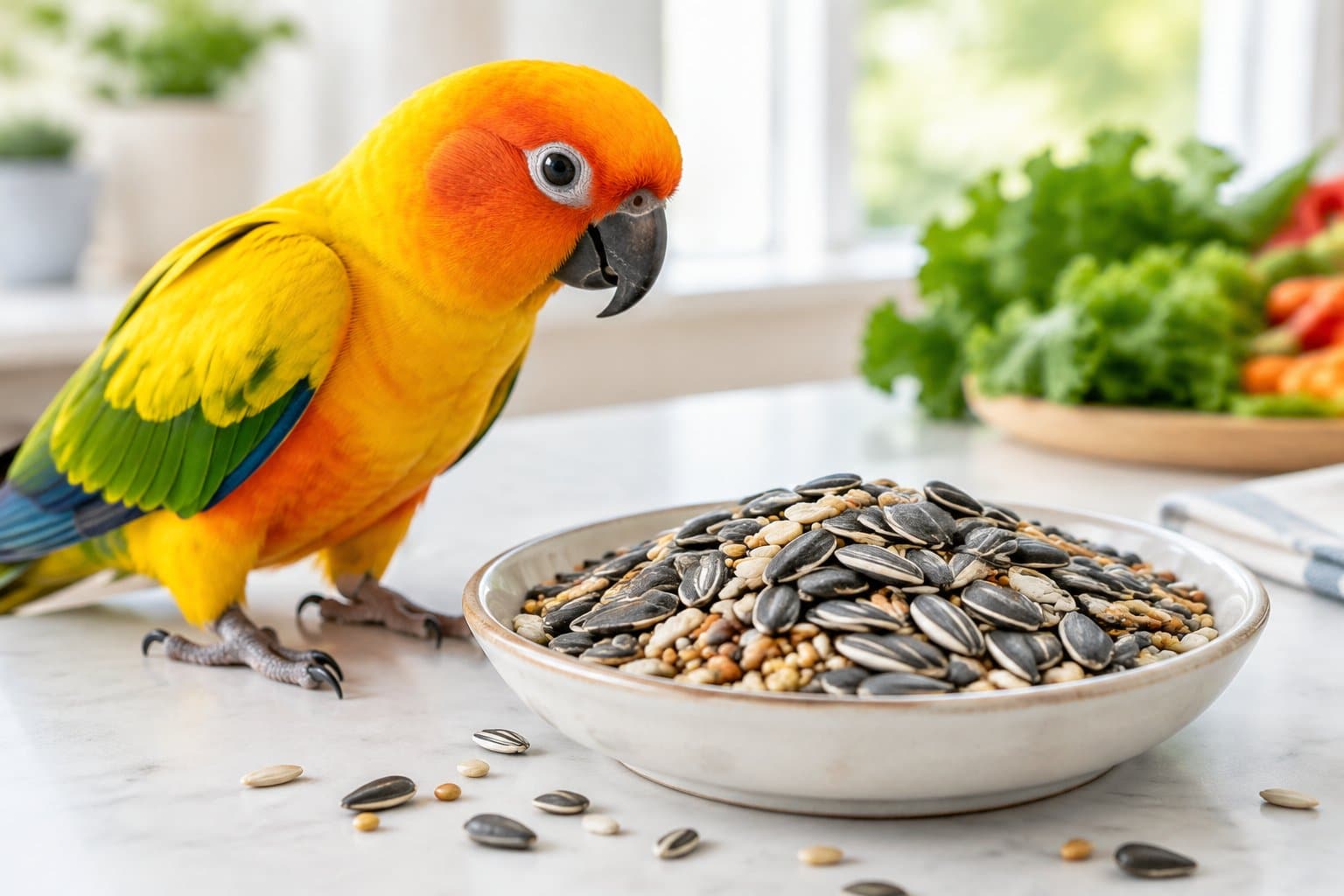
Many budget seed mixes rely heavily on sunflower seeds because birds find them appealing and will pick them out first. This can trick you into thinking your parrot likes the mix, when really it’s just eating the fattiest piece and leaving the rest behind. Over time, this selective feeding habit leads to an unbalanced diet.
Sunflower seed kernels are roughly half fat by weight. That much fat is excessive for a parrot that spends most of its day in a cage. Regular consumption can contribute to obesity, and in birds, obesity raises the risk of fatty liver disease, arthritis, and heart disease.
These blends also tend to be low in calcium, vitamin A, and other nutrients your parrot needs for strong bones and a healthy immune system. Relying on seeds alone, especially sunflower-dominant ones, leaves gaps that aren’t easy to fill without other food sources.
Avian vets generally recommend a diet built around a high-quality formulated pellet, supplemented with fresh vegetables and limited fruit. If you do offer seeds, they should make up a small portion of the diet rather than the bulk of it, and a varied mix is better than one dominated by a single fatty seed type.
3. Honey-Coated Seed Sticks
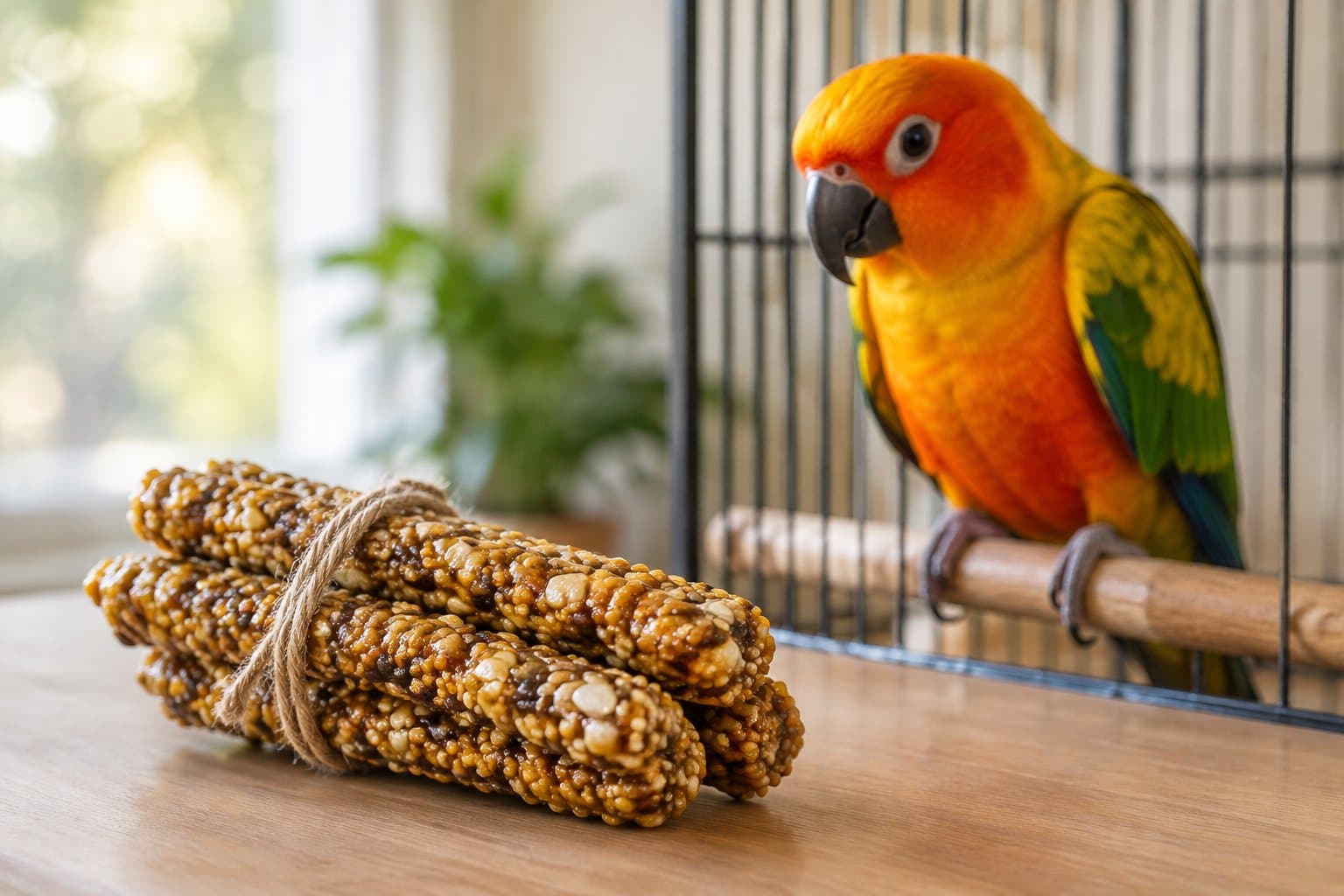
You’ve likely seen these hanging in the bird aisle, marketed as a wholesome snack for your parrot. In reality, they are seeds glued together with honey or other sugary binders, so every bite comes with added sugar and a lot of fat.
These sticks are designed to hang in the cage for hours at a time. This turns an occasional reward into a constant food source your parrot can graze on all day. Your bird’s natural hunger cues get disrupted, and it may start skipping its formulated pellets or fresh vegetables in favor of the sweet stick.
The sugar content can also contribute to weight gain and digestive upset over time.
Avian vets generally recommend limiting treats to small amounts given by hand, not left in the cage. Fresh vegetables, a small piece of fruit, or a few measured seeds work better as rewards. Your parrot’s diet should center on a quality pellet base, with treats making up a small fraction of daily intake rather than a steady snack.
4. Yogurt-Coated Treats
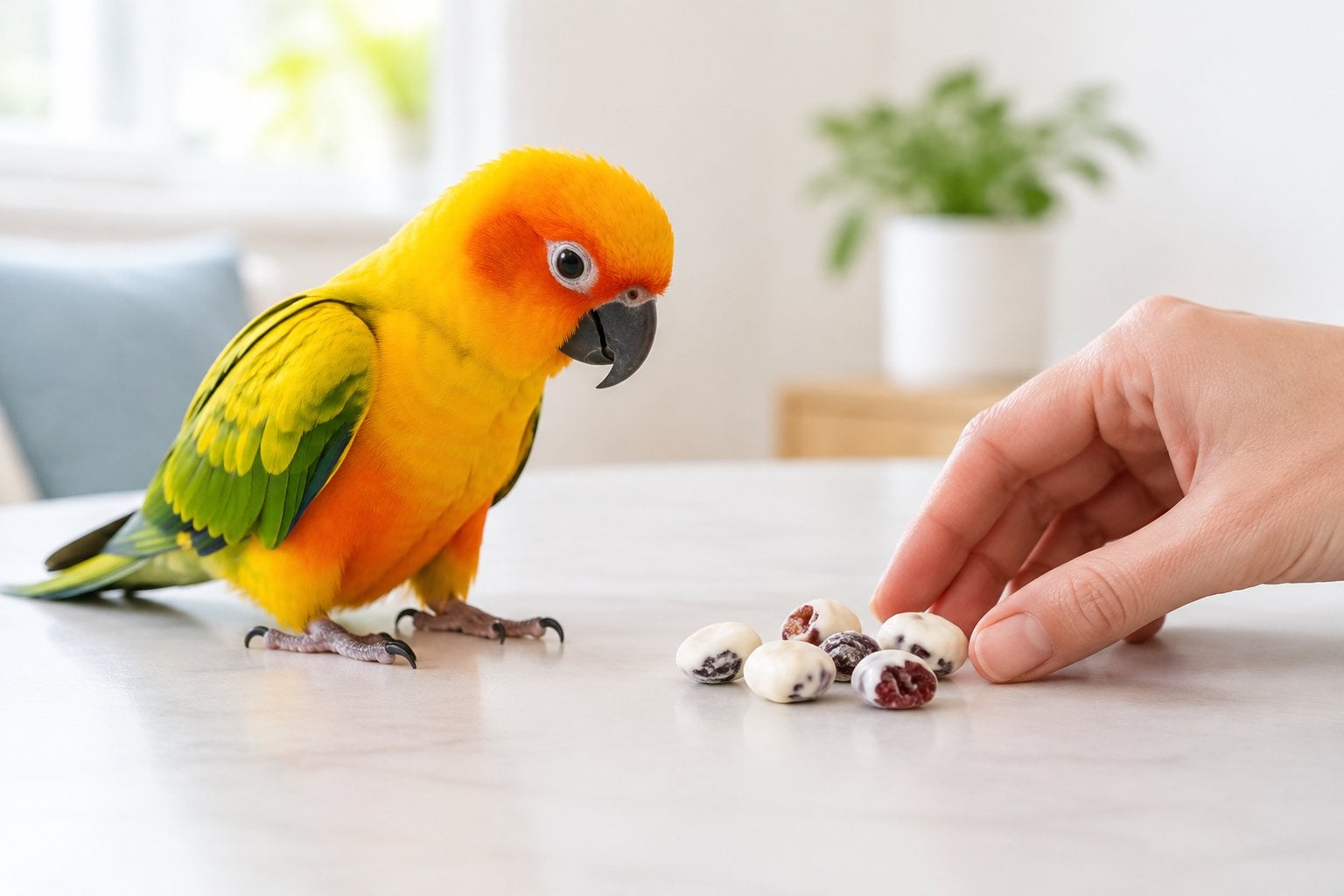
Yogurt-coated treats sound wholesome because of the name, but the coating is mostly sugar and fat, often palm kernel oil, with only a little yogurt powder mixed in. It is closer to candy coating than to the yogurt in your fridge.
The high fat and sugar content is the main problem. Parrots do not process excess sugar well, and repeated use of these treats can contribute to obesity and fatty liver disease over time.
Birds also don’t digest dairy well, because they lack lactase, the enzyme that breaks down milk sugar. That makes the health halo around these treats even more misleading.
Avian vets generally recommend skipping these coated treats entirely. Instead, you can offer small amounts of fresh, bird-safe fruit like blueberries or banana as an occasional reward.
Pelleted treats formulated specifically for your bird’s species are a safer choice when you want to reward good behavior. Reading the ingredient label carefully helps you avoid products that rely on sugar and fillers disguised as a healthy coating.
5. Seed Bells and Seed Cakes
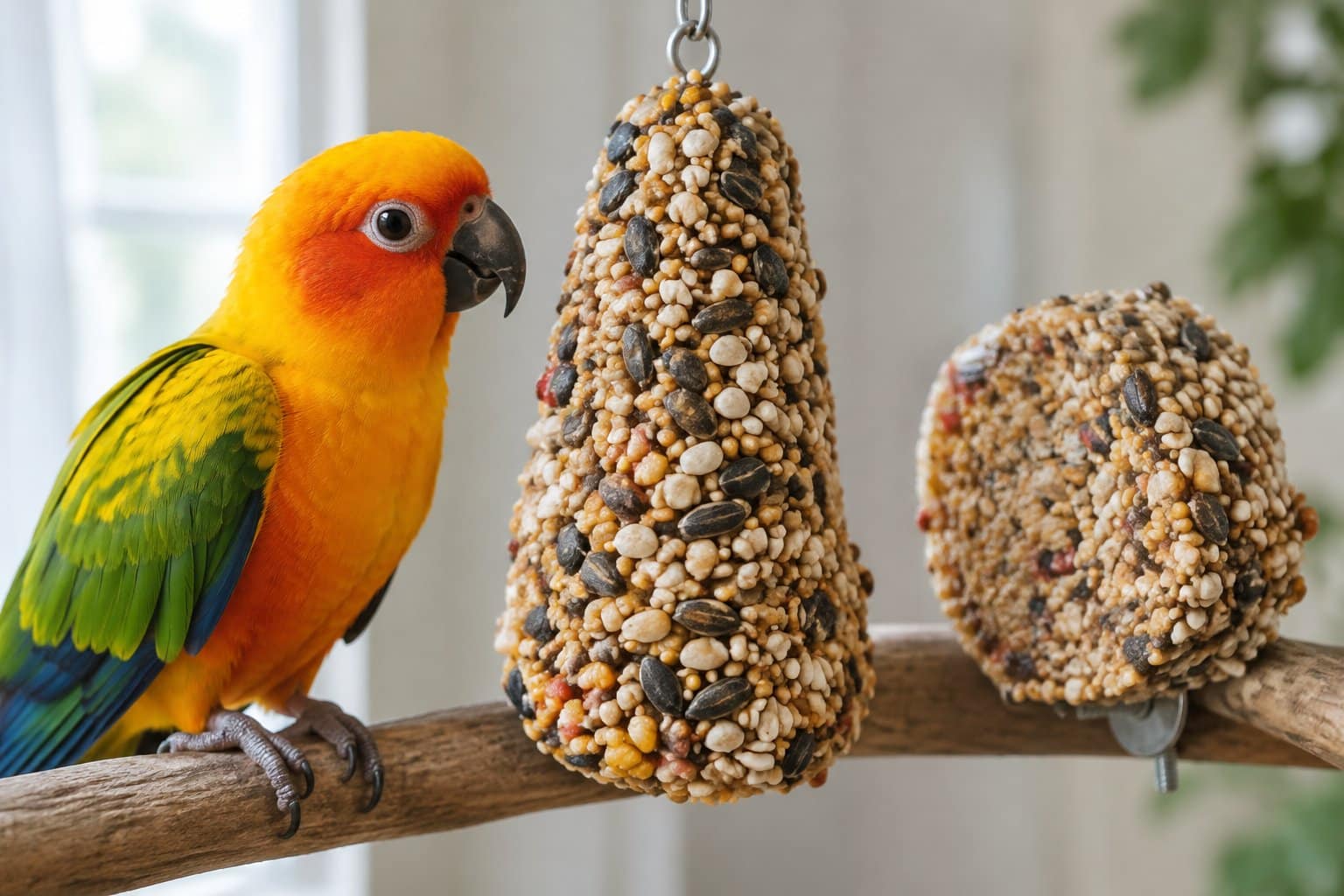
Seed bells and seed cakes look appealing hanging in a cage, but they are often little more than compressed seeds held together with sugary syrup or gelatin. When you check the ingredient list, you will usually find added sugar, corn syrup, or honey acting as the binding agent. This turns what looks like a wholesome treat into something closer to candy.
Your parrot can also pick out the seeds it likes and leave the rest, which means it ends up eating a diet heavy in fat and low in overall nutrition. This selective eating habit is one of the main reasons avian vets warn against seed-based products as a dietary staple.
Over time, this pattern can contribute to obesity and fatty liver disease, especially in species prone to weight gain. Seed bells also tend to sit in the cage for days, collecting bacteria and moisture.
Avian vets generally recommend a pellet-based diet supplemented with fresh vegetables and limited amounts of fruit. If you want to offer seeds, do so sparingly and as a small part of a varied diet, not as a hanging centerpiece.
6. Vitamin-Coated Seed Mixes
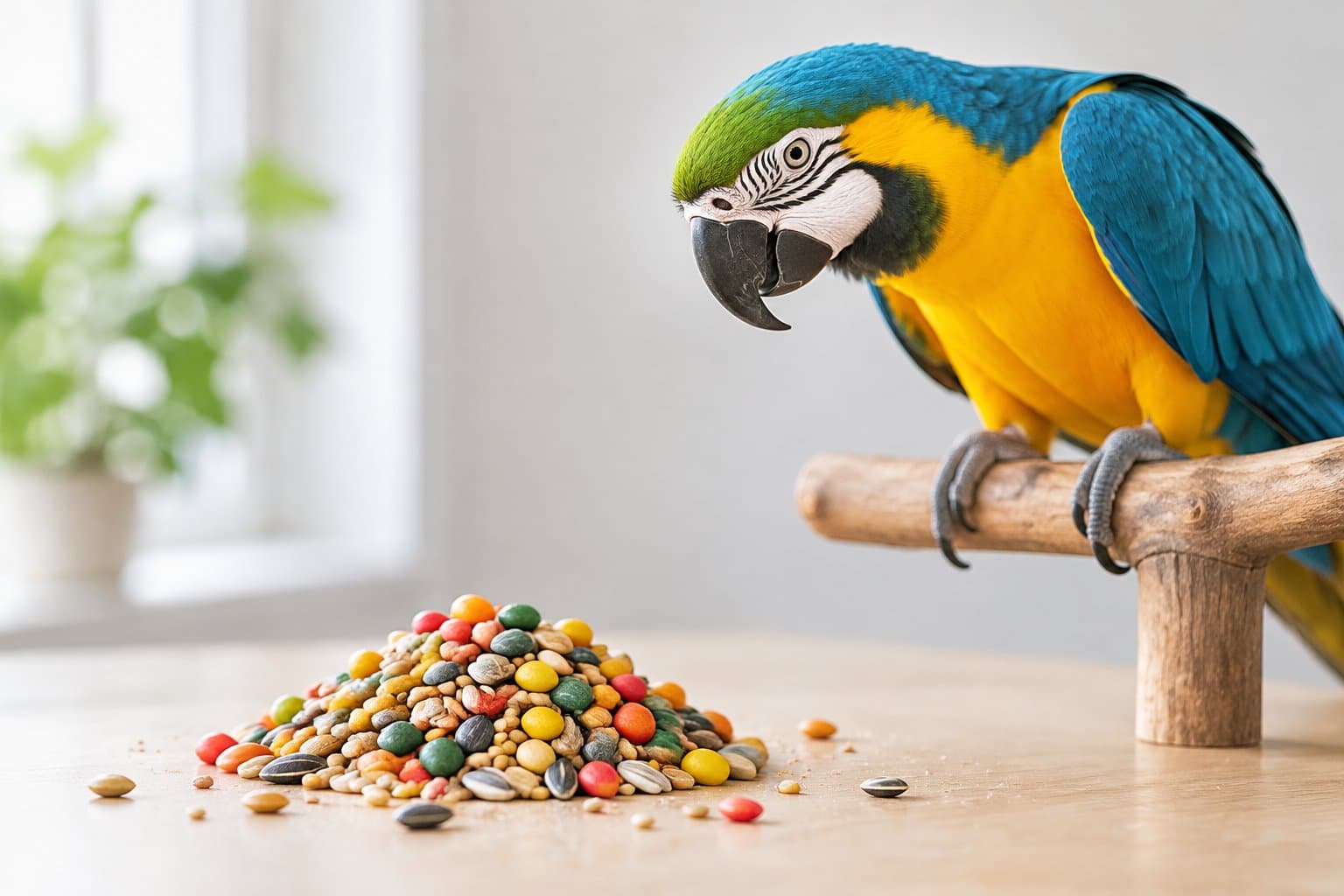
Vitamin-coated seed mixes rely on a spray-on nutrient coating applied to the outside of each seed. The problem is that your parrot usually cracks the shell and eats the inner kernel, leaving the coated hull behind in the dish or on the cage floor. This means most of the added vitamins never actually reach your bird. (Some mixes coat seeds that were already hulled, which avoids this problem, so read the label.)
You end up paying for fortification that looks good on the bag’s label but does not translate into real nutrition. The base seeds themselves, often sunflower and safflower, are already high in fat and low in the vitamin A, calcium, and other nutrients parrots need. Coating cannot fix that imbalance if the coating is discarded with the shell.
Avian vets generally recommend pelleted diets instead, since the nutrients in a formulated pellet are mixed throughout the entire piece. Your bird cannot eat around the fortification because there is no shell to crack and discard. If you want to keep some seed in the diet, vets typically suggest treating it as a minor supplement rather than a primary food source, alongside fresh vegetables and a quality pellet base.
7. Pellets With Artificial Colors
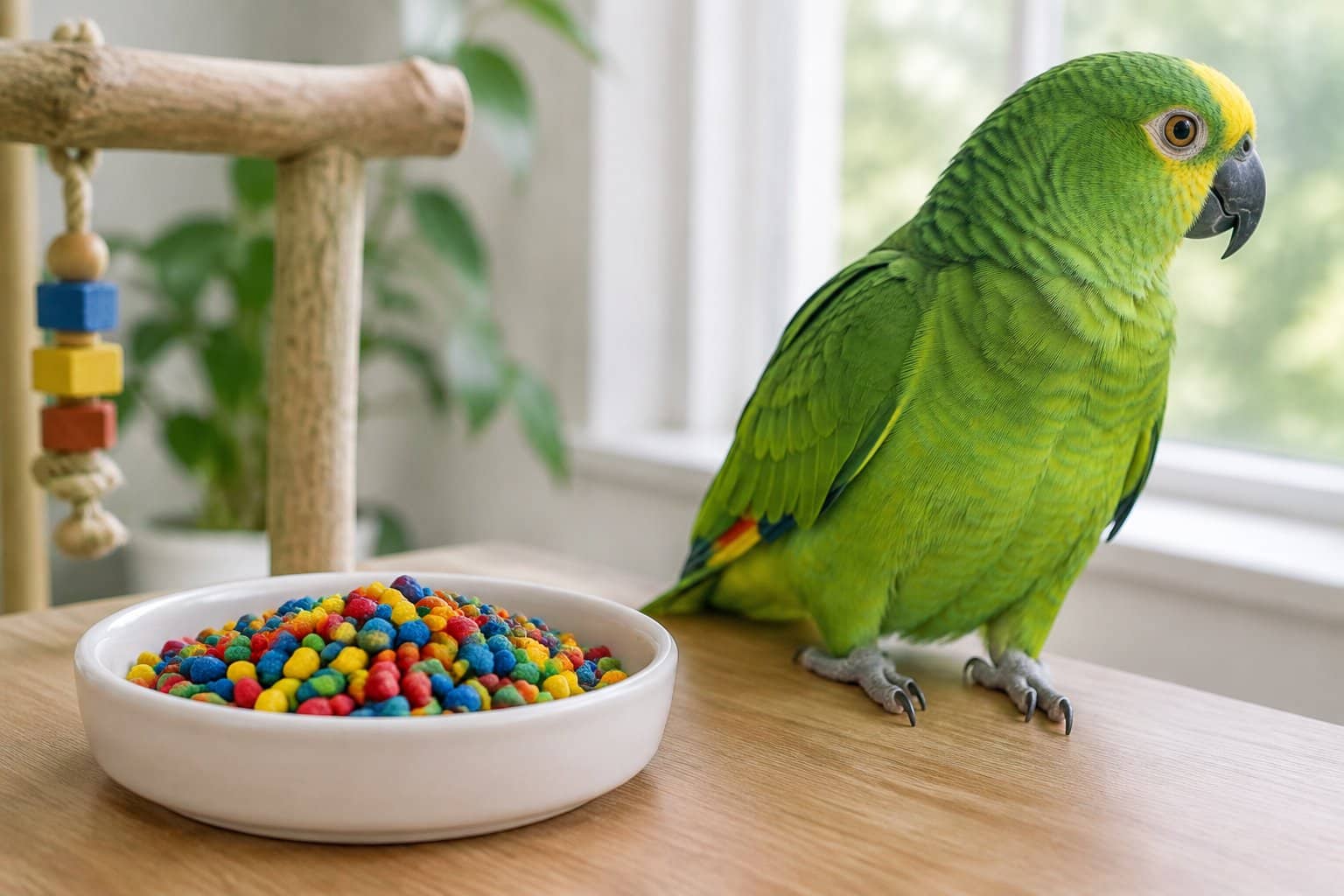
Brightly colored pellets look appealing to you, but they serve no nutritional purpose for your bird. Parrots do not need pellets dyed red, green, or blue to find them interesting, and the coloring is added purely to catch your eye at the store.
The dyes are not known to be toxic, but they add nothing your bird needs. Colored pellets can also tint your bird’s droppings, and changes in droppings are one of the first signs owners use to spot illness, so dye-free pellets make that job easier.
Some pellet brands avoid dyes entirely and still get eaten readily by birds, which shows coloring isn’t necessary for acceptance. If your parrot already eats plain, naturally colored pellets, there is no reason to switch to a dyed version.
Avian vets generally recommend checking ingredient labels and avoiding anything listing artificial colors or vague terms like “color added.” Choosing pellets with simple, recognizable ingredients reduces your bird’s exposure to additives that provide no nutritional value. Your parrot will do just as well, if not better, on a plain pellet formulated around real food ingredients rather than visual appeal.
8. Sulfured Dried Fruit
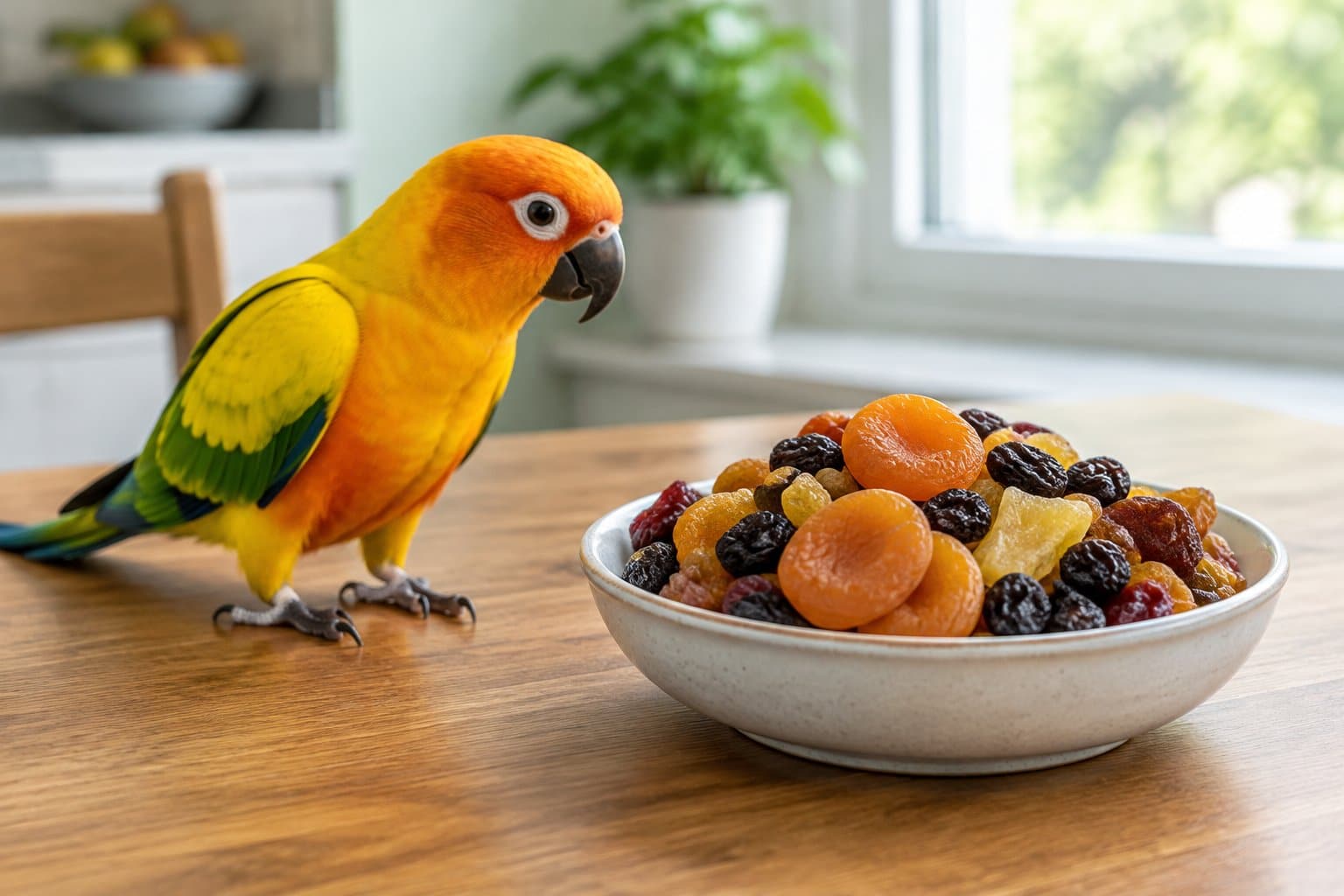
Dried mango, papaya, apricots, and apple rings sold in pet store treat aisles often contain sulfur dioxide or other sulfite preservatives. These compounds keep fruit looking bright and extend shelf life, but sulfites are known to cause reactions in some sensitive people, and many bird experts recommend unsulfured fruit for parrots to be safe.
Beyond the sulfites, dried fruit is a sugar bomb. Removing the water concentrates the natural sugars, so a few pieces deliver far more sugar than the fresh equivalent. Regular feeding can contribute to obesity.
Avian vets recommend offering fresh or frozen fruit instead of dried fruit, cut into small pieces and given in moderation. If you want to dry fruit yourself, look for unsulfured options with no added sugar, and always treat it as an occasional snack rather than a dietary staple.
9. Sugar-Infused Dried Fruit
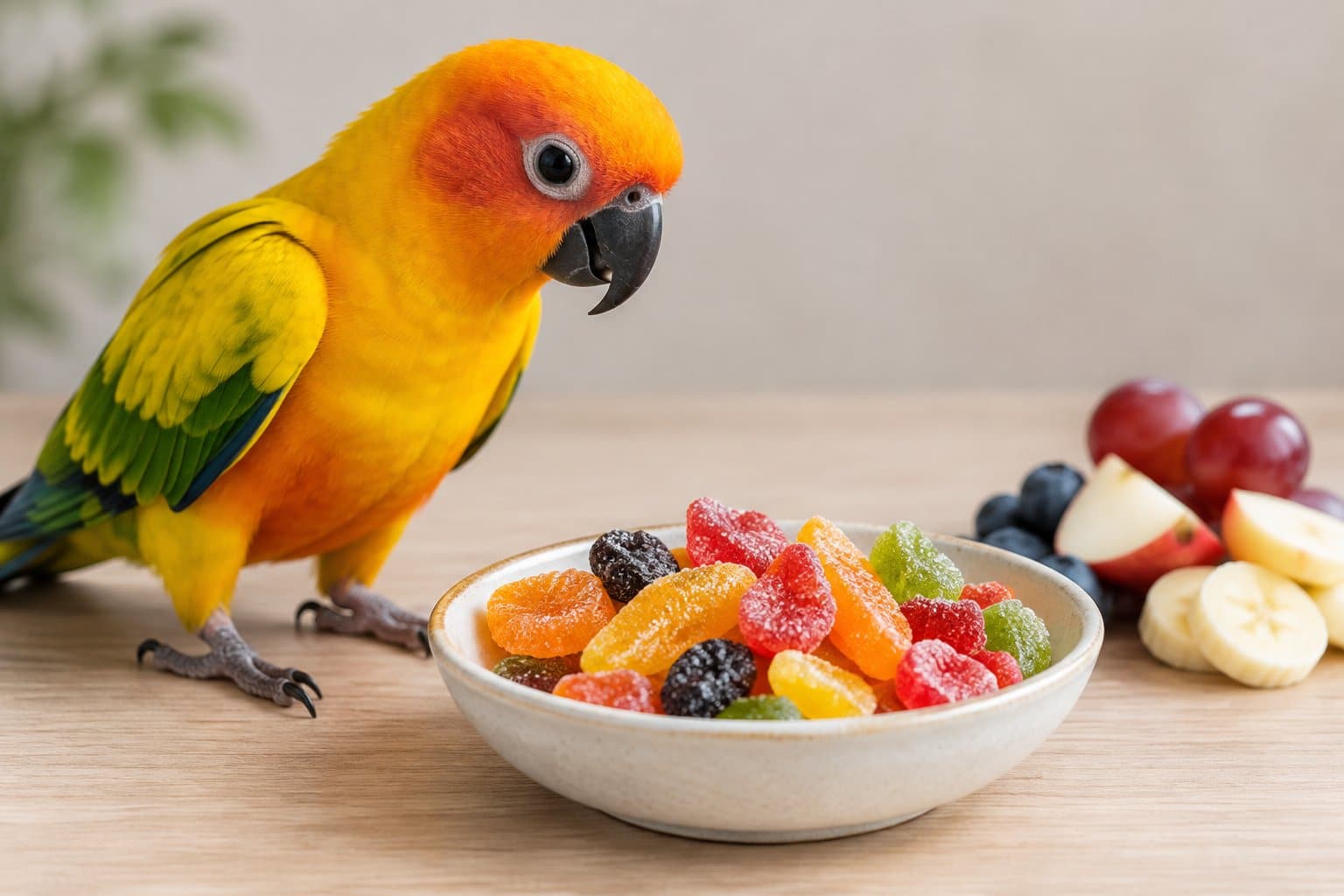
When you grab a bag of dried fruit mix at the pet store, you might assume it’s a healthy alternative to fresh produce. Many commercial versions are coated in added sugar or syrup, which turns a reasonable snack into a problem. The drying process already concentrates natural sugars, so piling more on top makes the final product far sweeter than your parrot needs.
Regular consumption can contribute to obesity and fatty liver disease in parrots. A small bird’s body weight is measured in ounces, so a few sweet pieces a day add up quickly.
Avian vets generally recommend fresh fruit instead, offered in small portions as an occasional treat rather than a dietary staple. If you want to use dried fruit, look for unsweetened, unsulphured options and check the ingredient label carefully. Your bird’s diet should center on formulated pellets and vegetables, with fruit making up a small fraction of daily intake.
10. Salted and Seasoned Nut Mixes
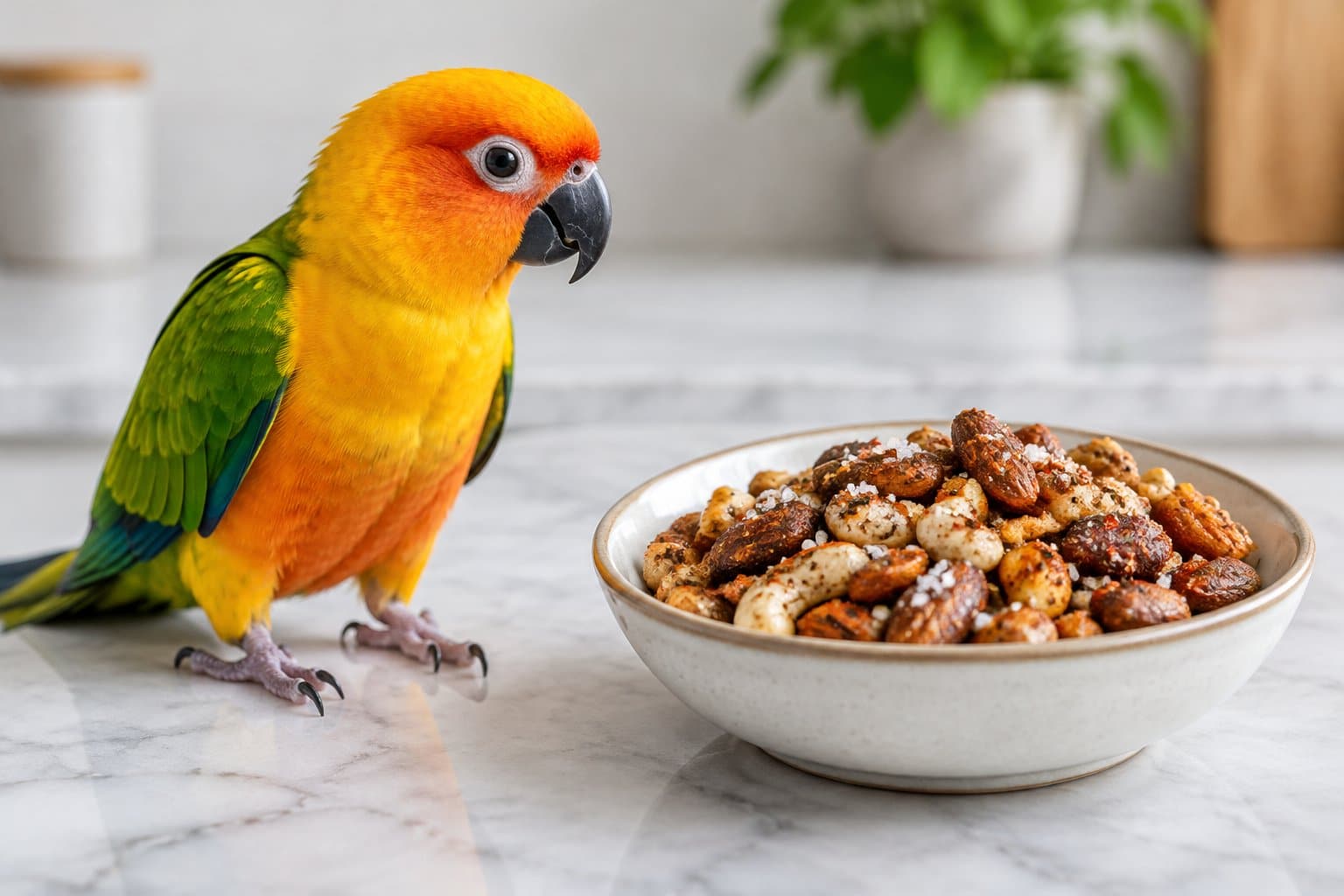
Salted, roasted and seasoned nut mixes made for people are easy to grab off the snack shelf and share with a parrot. They are often coated in salt, garlic powder, onion powder, or artificial flavoring, and several of those pose real risks to your bird.
Excess sodium is a serious problem for birds. A small bird’s body can’t handle the salt levels found in seasoned snack mixes, and too much salt can lead to excessive thirst, kidney problems, and even salt poisoning.
Garlic and onion powder present their own dangers. Onions contain compounds that can damage red blood cells and cause anemia in birds, and garlic is in the same plant family, so avian vets advise keeping both away from parrots.
Rancid or improperly stored nuts are another concern, since nuts are high in fat and can spoil quickly if not kept fresh, exposing your bird to mold toxins.
Avian vets recommend offering plain, unsalted, unseasoned nuts like almonds or walnuts instead, given in small portions as occasional treats. Shelled or in-shell raw nuts without added coatings let you control exactly what your parrot consumes, without the hidden seasoning risks that come with pre-made mixes.
11. Cheap In-Shell Peanuts
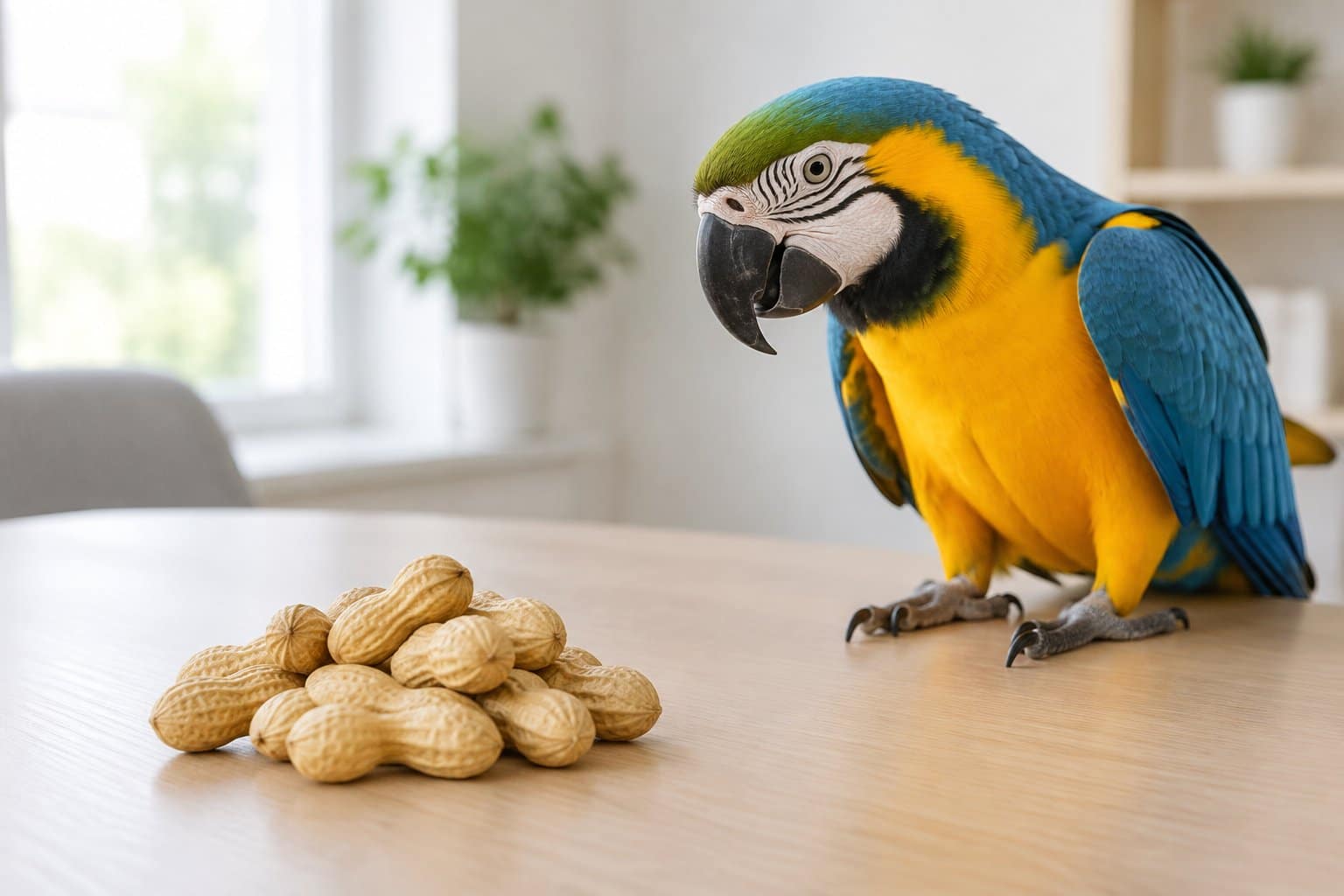
Peanuts sold in bulk bags for wildlife or budget bird feeding may not be held to the same standards as peanuts sold for people. These products are often stored and handled without strict moisture control, which raises the risk of mold growth.
The shells themselves are a particular concern. Peanuts can carry Aspergillus molds that produce aflatoxins, and the shell is where contamination tends to be worst. If your parrot cracks open a contaminated shell, it can ingest these toxins directly.
Aflatoxin exposure can damage your bird’s liver over time, and in significant amounts it can be fatal. Because you can’t see or smell mold contamination reliably, there’s no safe way to sort good peanuts from bad ones by inspection alone.
Avian vets generally advise skipping in-shell peanuts marketed for wild birds or squirrels and choosing raw, shelled peanuts intended for human consumption instead, offered only occasionally. Some vets recommend avoiding peanuts altogether and replacing them with unsalted almonds or walnuts, which still give your parrot the enrichment of cracking open a treat.
12. Millet Spray Fed as a Main Meal
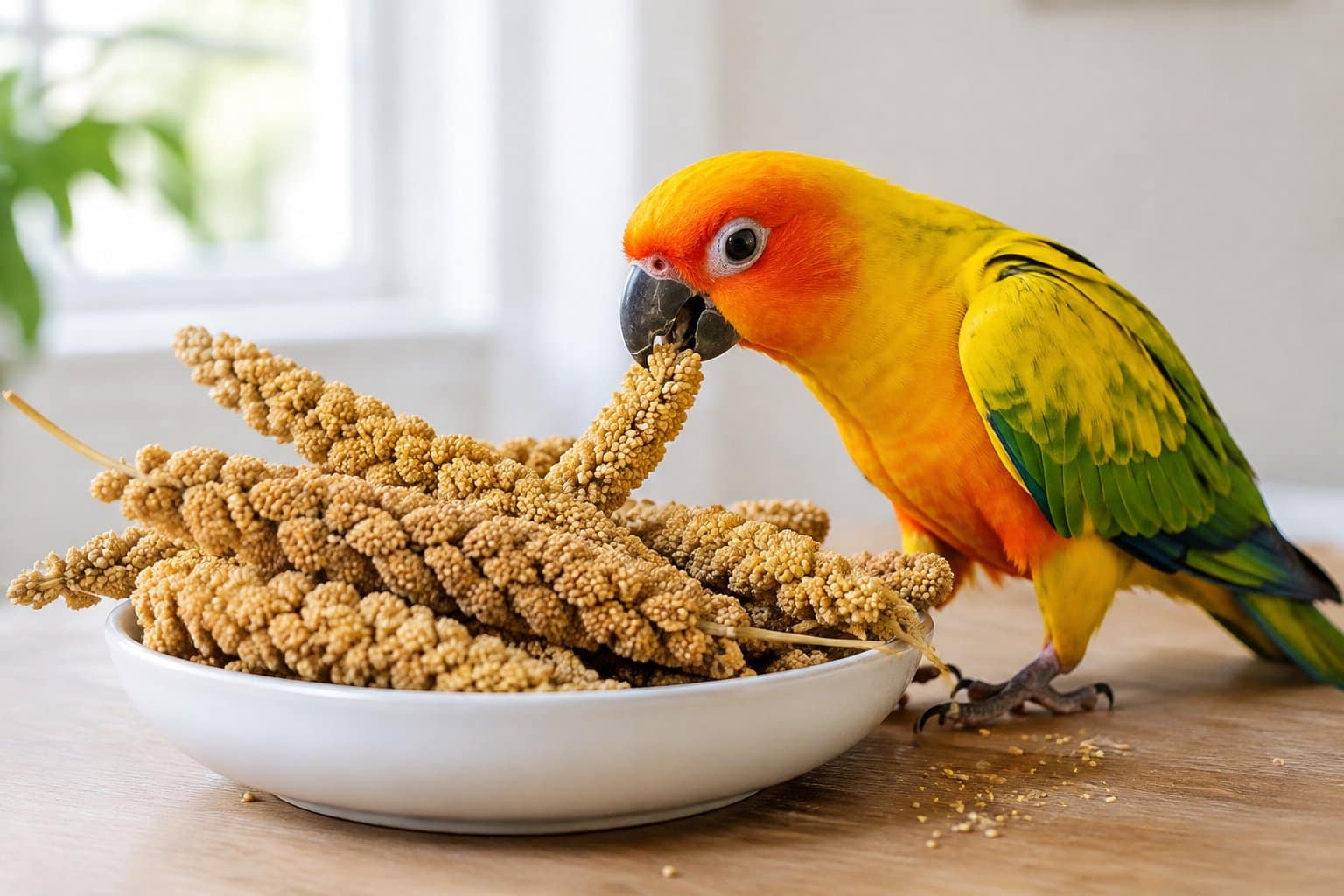
Millet spray is not harmful on its own, but problems start when you treat it as a full meal instead of an occasional treat. The seeds are low in protein and fat compared to your parrot’s broader nutritional needs, and they lack many vitamins and minerals your bird requires daily.
If millet spray makes up most of what you offer, your parrot may fill up on it and ignore pellets, vegetables, and other foods that provide balanced nutrition. This selective eating habit is common with seed-based diets in general, and it can leave gaps in your bird’s intake over time.
Avian vets typically recommend millet spray as an enrichment item or training reward rather than a dietary staple. It works well for encouraging foraging behavior or rewarding good behavior in small amounts.
Your parrot’s main diet should center on a formulated pellet base, supplemented with fresh vegetables, some fruit, and limited seeds. If you currently rely on millet spray heavily, talk to your vet about gradually shifting your bird toward a more complete feeding plan.
13. Wild Bird Seed
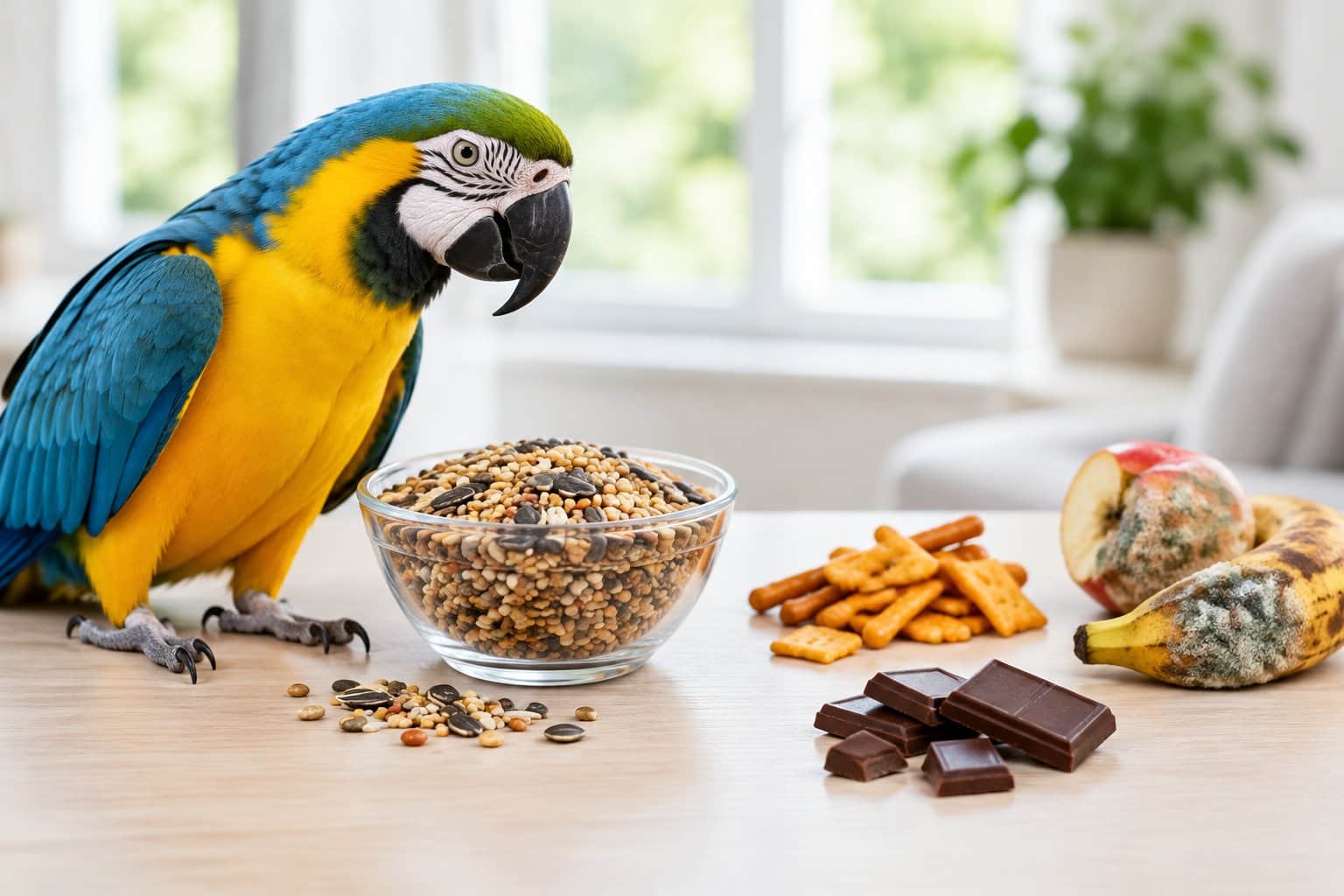
Wild bird seed is made for backyard birds like sparrows and finches, not for your parrot. It often contains milo, cracked corn, and other cheap fillers that pet parrots tend to pick out and leave behind. What remains in the dish is usually the least nutritious part of the mix.
This type of seed is also not formulated with the vitamins and minerals your parrot needs. Wild birds get the rest of their nutrition from insects, berries, and other food sources in their natural environment. Your pet parrot does not have that option, so a diet based on wild bird seed can leave it deficient over time.
There is also a contamination risk to consider. Wild bird seed is often stored in bulk and may not meet the same quality or cleanliness standards as food made specifically for companion birds. Mold, dust, and pests can be more common in these products.
Avian vets recommend feeding your parrot a pelleted diet designed for its species, along with fresh vegetables and a small amount of fruit. If seed is included at all, it should be a species-appropriate mix made for pet parrots.
14. Old or Stale Bulk Seed
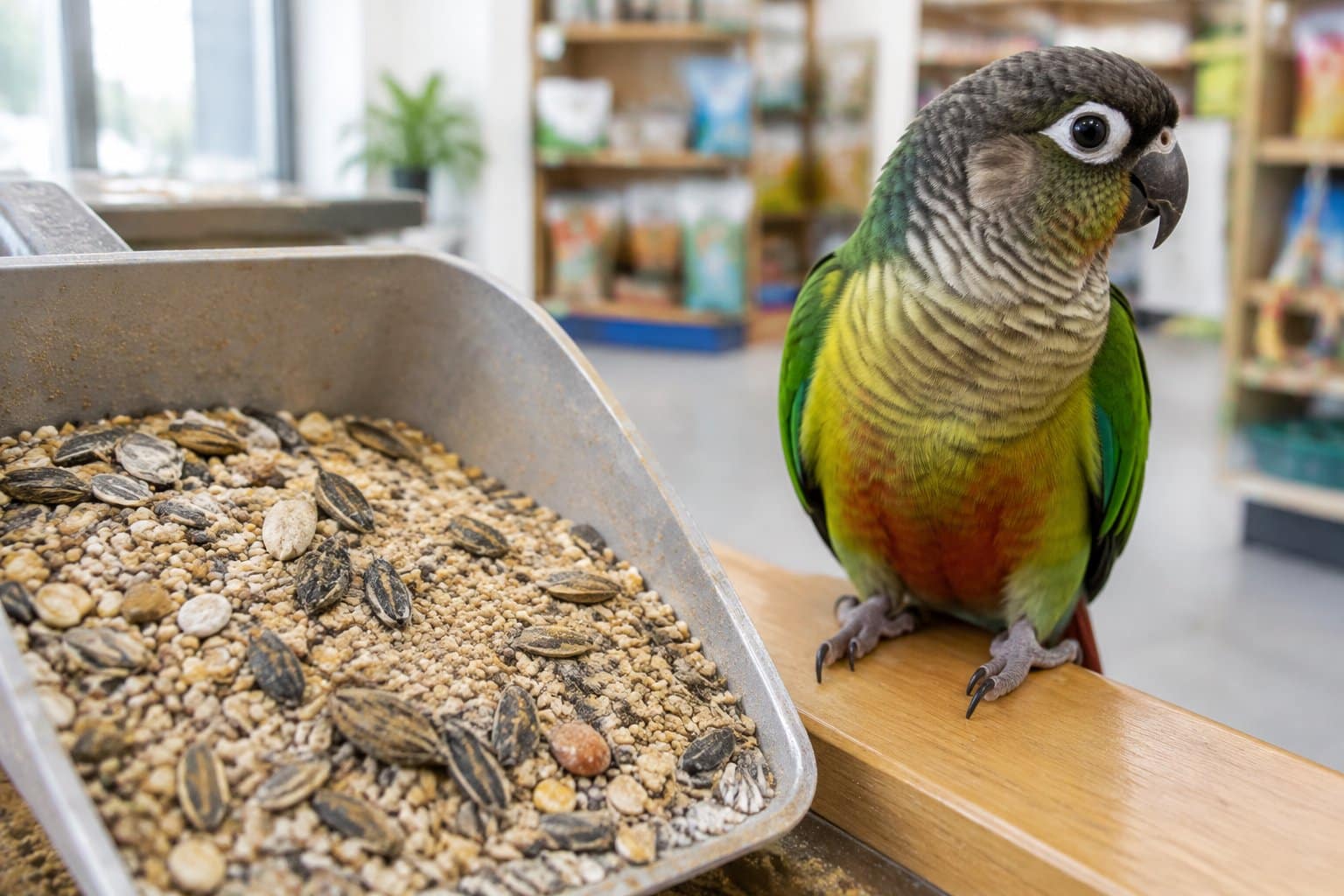
Buying seed in bulk can seem like a smart way to save money, but it often sits in storage for months before it reaches your parrot’s bowl. Seed loses nutritional value over time, especially fats and vitamins that break down with exposure to air, light, and heat. The longer seed sits, the less benefit your bird gets from it, even if it looks fine.
Stale seed is also more likely to harbor mold, insects, or rancid oils you can’t always detect by sight alone. A musty smell or any visible webbing means it should be thrown out right away. Rancid fats in old seed can cause digestive upset and contribute to long-term health problems.
You should check bulk seed often for freshness and store it in a cool, dry, airtight container rather than leaving the original bag open. Buying smaller quantities more frequently helps you avoid this problem altogether. Avian vets generally recommend pairing any seed with fresh vegetables, fruits, and a quality pellet diet, since seed alone is not nutritionally complete for most parrot species.
15. Bird Crackers and Biscuits With Added Sugar
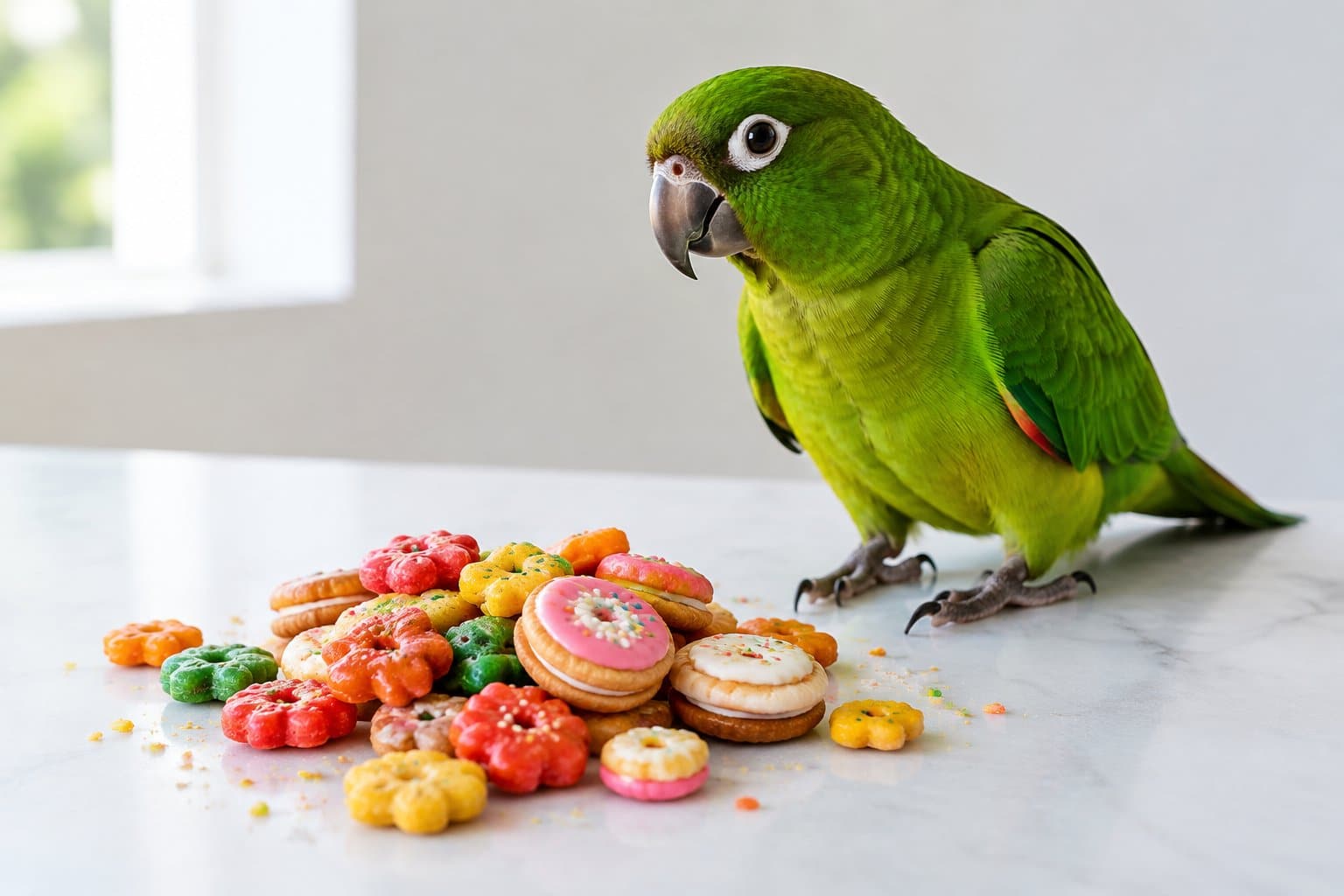
Many crackers and biscuits marketed for parrots contain added sugar, honey, or corn syrup to make them more appealing. These ingredients offer no real nutritional benefit to your bird and are often included purely to improve taste and encourage repeat purchases.
Parrots do not process sugar the same way humans do, and regular intake of sweetened snacks can contribute to weight gain. Over time, a diet that includes frequent sugary treats may also reduce your bird’s appetite for the nutrient-dense foods it actually needs, such as vegetables and pellets.
Some crackers also contain high amounts of salt or processed fats alongside the sugar, compounding the problem. Birds have small bodies, so a cracker that seems tiny to you is a big snack for them.
Avian vets generally recommend treating crackers and biscuits as occasional items at most, not daily fare. If you want to offer a crunchy treat, look for plain, unsalted, unsweetened options, or consider offering small pieces of fresh vegetables instead, which satisfy your bird’s interest in variety without the added sugar.
16. Sugary Breakfast Cereals
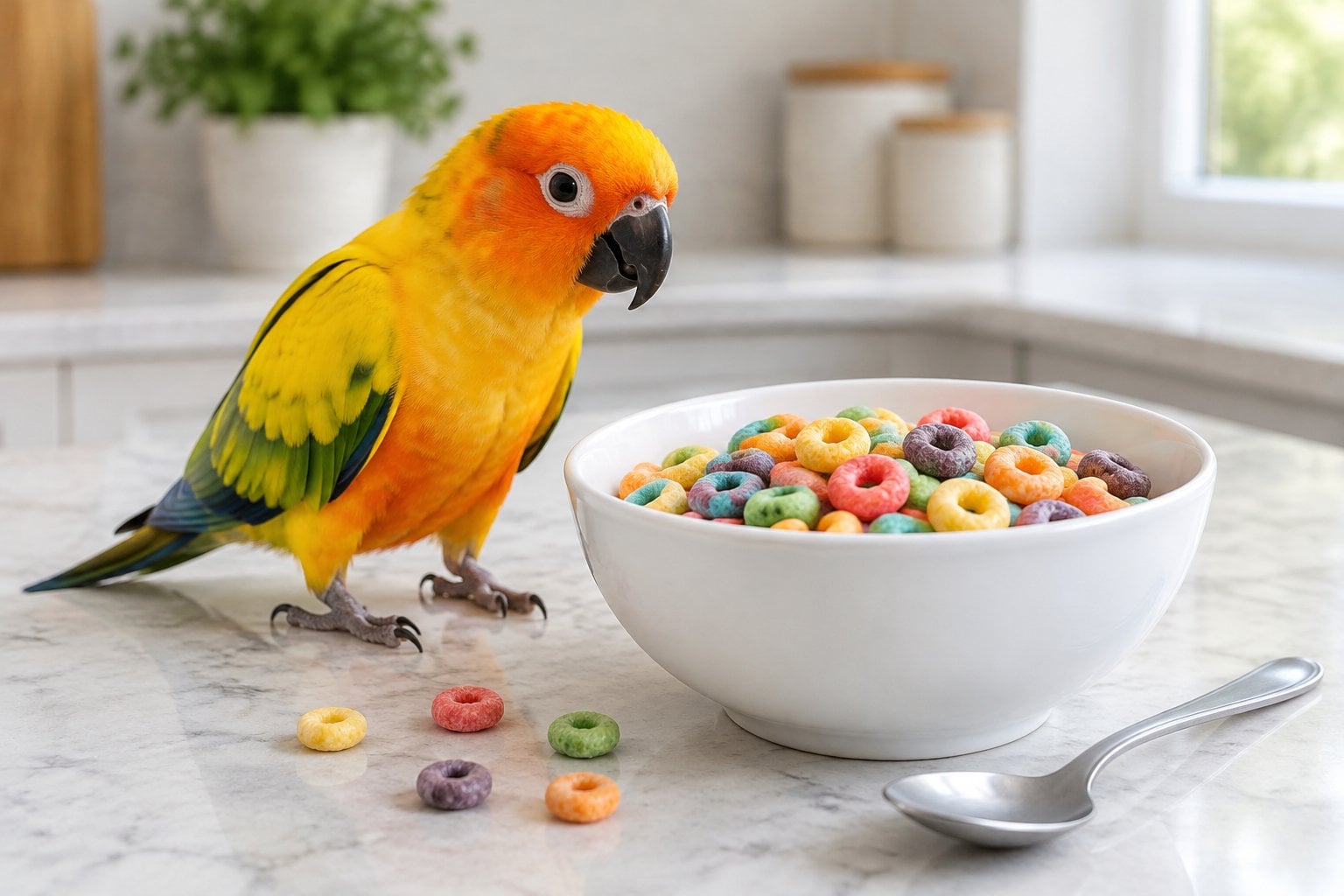
If you share your morning cereal with your parrot, you are likely giving it far more sugar than it can handle. Most breakfast cereals, including frosted and honey-coated varieties, contain high amounts of added sugar per serving. This can contribute to obesity and fatty liver disease in parrots over time.
You should also check the ingredient list for chocolate-flavored cereals. Chocolate contains theobromine and caffeine, both of which are toxic to birds and can cause serious health problems even in small amounts.
Plain cereal without added sugar still isn’t an ideal choice for your bird. These products offer little nutritional value and are typically made from refined grains that lack the vitamins and minerals your parrot needs.
Avoid pouring milk over cereal if you offer it to your bird at all. Parrots don’t produce lactase, the enzyme needed to digest lactose, so dairy can cause digestive upset.
Avian vets generally recommend offering fresh vegetables, limited fruit, and a formulated pellet diet instead. These options give your parrot more balanced nutrition without the sugar and additives found in most cereals.
17. Fruit Juices and Sweetened Drinks
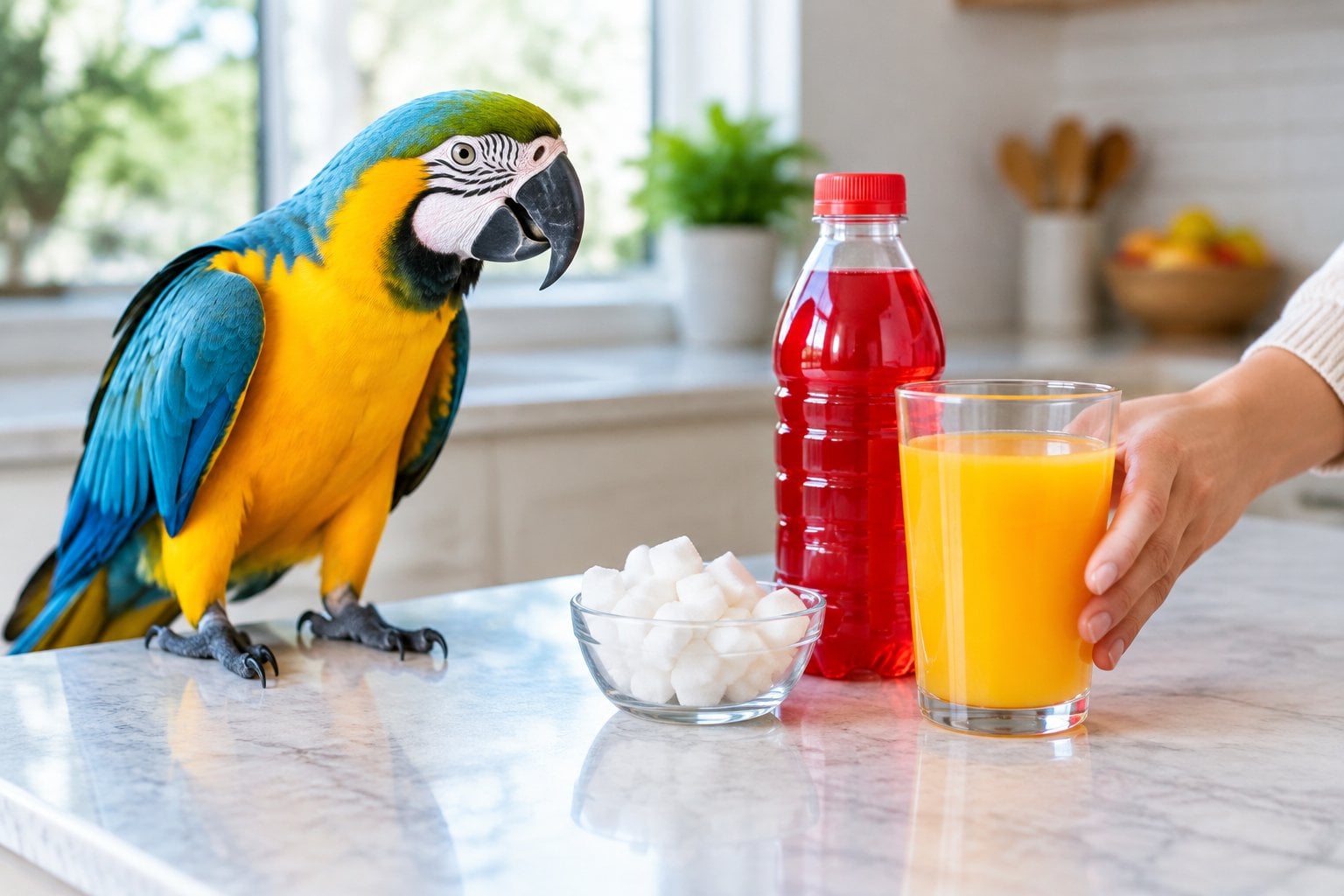
Fruit juices marketed for parrots look like a healthy treat, but they offer little nutritional value compared to whole fruit. Juicing removes the fiber your bird would normally get, leaving behind mostly sugar and water. This concentrated sugar content can contribute to weight gain and digestive upset over time.
Many bottled juice products also contain added sugars or sweeteners beyond what’s naturally in the fruit. Your parrot’s digestive system isn’t built to process large amounts of sugar regularly. Repeated exposure adds calories that can contribute to obesity and fatty liver disease, a common problem in pet birds fed poor diets.
Some sweetened drinks marketed for birds also contain artificial flavors or dyes that serve no nutritional purpose. These additives don’t offer your bird anything beneficial.
Avian vets generally recommend offering fresh water as your parrot’s primary drink and giving small amounts of fresh, whole fruit instead of juice. Whole fruit retains fiber and takes longer to eat, which naturally limits sugar intake. If you want to offer variety, diluted fresh juice in very small amounts is a safer occasional option than commercial sweetened drinks.
18. Grit and Gravel
Grit is often sold in pet stores as a necessary digestive aid for your parrot, but this product category targets a misunderstanding of parrot anatomy. Grit works for birds like pigeons and doves that swallow seeds whole, since these birds need small stones in their gizzard to grind down the hulls. Parrots, however, crack open seed hulls with their strong beaks before swallowing, so the material never needs internal grinding.
Feeding your parrot insoluble grit doesn’t help digestion and can actually cause harm. Some birds eat too much of it, and the particles can build up in the digestive tract. This buildup can lead to impaction, a blockage that interferes with normal digestion and can become a medical emergency.
Avian vets generally say pet parrots don’t need grit. If your bird needs extra calcium or minerals, cuttlebone, mineral blocks, or a vet-recommended supplement are safer choices. Your parrot’s digestive system is built to function without added grit, so skip this product regardless of what the packaging claims.
19. Dog and Cat Food
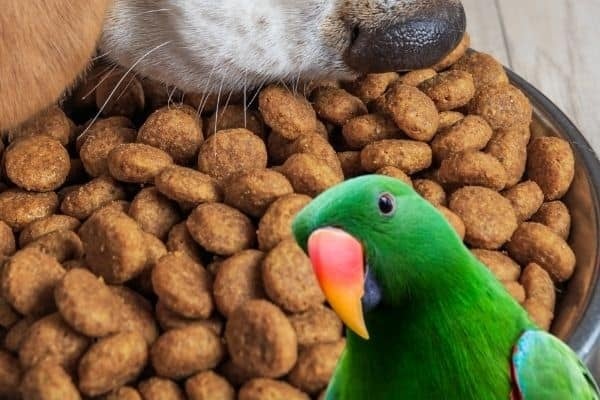
Giving your parrot dog or cat food is more common than you might think, especially when owners run out of bird pellets and reach for whatever is in the pantry. This is a mistake. Dog and cat food is formulated for the nutritional needs of mammals, not birds, and the protein and fat levels are far too high for a parrot’s digestive system.
Cat food in particular is loaded with protein meant to support an obligate carnivore’s diet. Too much protein over time is linked to kidney problems and gout in pet birds. Dog food is less extreme, but it still isn’t designed for a bird’s needs.
Neither of these foods contains the vitamins, minerals, or amino acid balance your parrot needs to thrive. You will not find the calcium or vitamin A levels a bird requires in a bag made for a Labrador or a tabby cat.
Avian vets are clear that you should never substitute dog or cat food for proper bird food. Stick to pellets formulated specifically for parrots, supplemented with fresh vegetables and limited fruit. If you run out of bird food, a short-term mix of plain cooked rice or vegetables is a safer stopgap than reaching for the dog bowl.
20. Hand-Feeding Formula in Inexperienced Hands
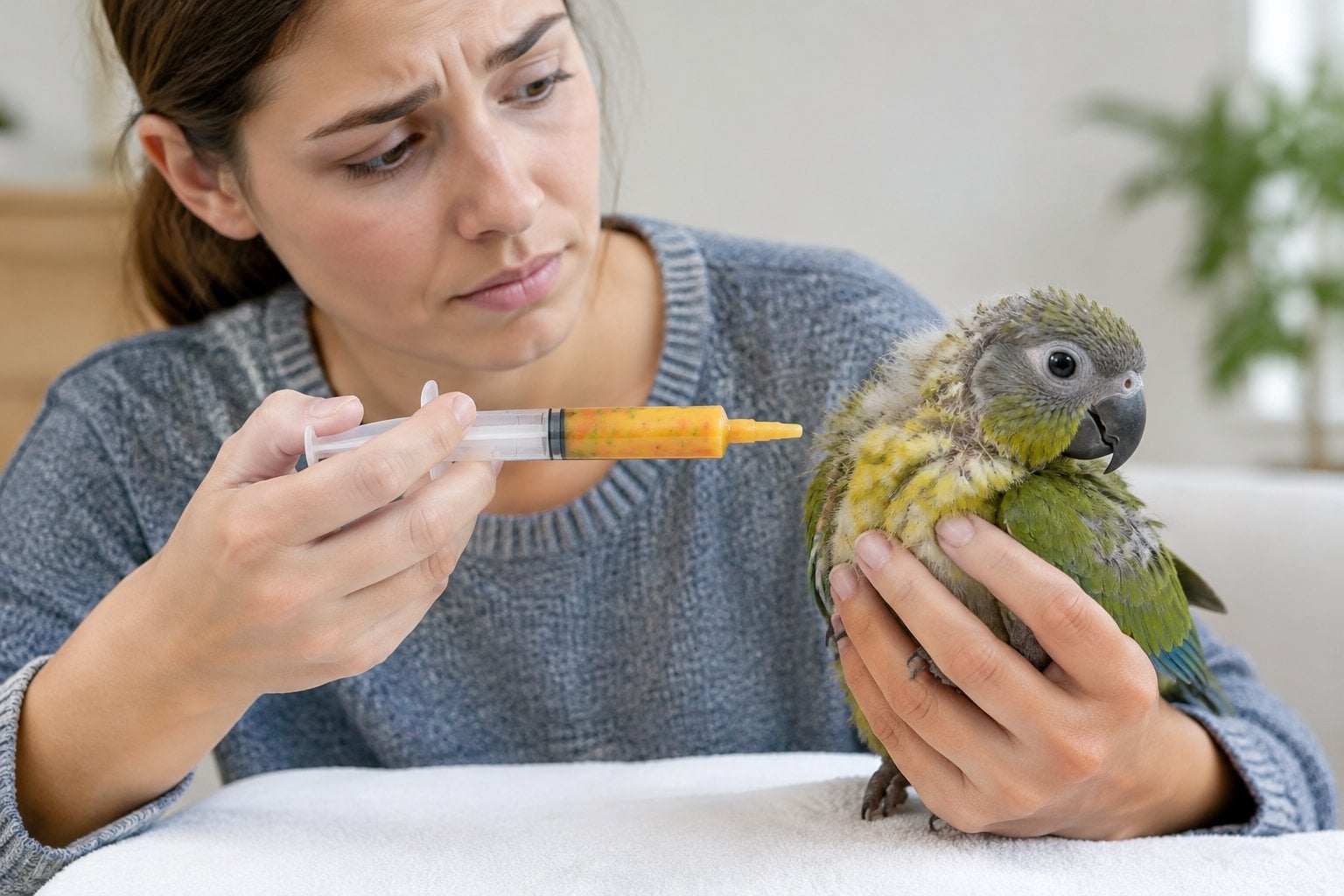
Hand-feeding formula itself is not a bad product, but it becomes dangerous when you mix or feed it without proper training. The formula isn’t the problem; the technique is.
If you prepare it at the wrong temperature, you risk burning your chick’s crop or feeding it something too cool to digest properly. Formula that is too thick can cause slow crop emptying, while formula that is too thin may not provide enough calories for healthy growth.
Feeding too fast or using the wrong tool can cause aspiration, where formula enters the airway instead of the crop. Aspiration is one of the most serious hand-feeding risks, can kill a chick quickly, and often happens because a beginner was never shown the correct syringe or spoon technique.
Inconsistent feeding schedules also create problems, since chicks need regular intervals to maintain proper crop emptying and growth rates. Letting formula sit out too long encourages bacterial growth, which can sicken a fragile chick quickly.
Avian vets recommend that first-time hand-feeders work directly with a breeder, vet, or experienced mentor before attempting it alone. Learning proper formula temperature, consistency, and feeding speed in person reduces the risk of crop burns, aspiration, and infection significantly.


